



 from $5.00 USD $10.00 USD
 $6.00 USD
 from $9.00 USD
 from $6.00 USD
 from $3.00 USD $9.00 USD


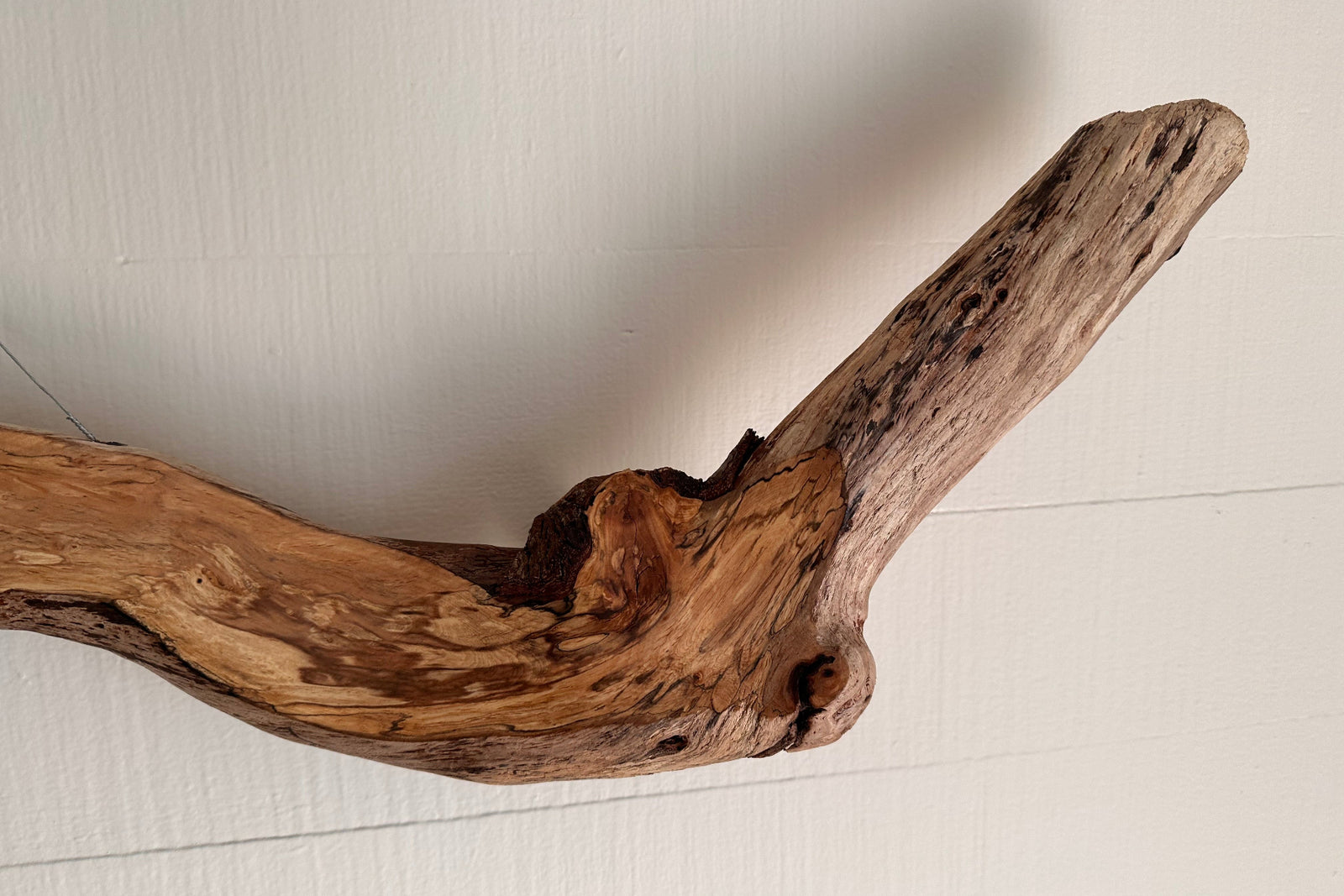
In 2026, Geoff created a series of 20 one-of-a-kind driftwood art pieces and wood sign placards for a local hotel, the Manzanita Oceanfront Inn. This page hosts a virtual gallery of the project and a behind-the-scenes look at the making and installation.
"When I embarked on this project, I didn't realize how all-consuming it would be. There were many details and problems to solve, and it occupied my hands and mind for over two months. At the end, I was surprised by how very much I enjoyed the discovery in the materials.
Working with unique pieces of driftwood is high risk: if something goes wrong, there is no starting over. I had to fail three times before I got over that. You never know what you're going to get until you're halfway through.
Every step adds to the finished product. It's not until the clear coat finish was applied to the sanded wood that you truly get to see what you were working on this whole time.
Each piece is one of a kind, and yet the collection as a whole had more coherence than I could have imagined. The wood used to be a part of a living tree, and I was bringing these old, discarded, weathered pieces back to life. On the beach they looked indistinguishable in piles, but individually each piece had a different story to tell."
- Geoffrey Franklin, 2026
"When I embarked on this project, I didn't realize how all-consuming it would be. There were many details and problems to solve, and it occupied my hands and mind for over two months. At the end, I was surprised by how very much I enjoyed the discovery in the materials.
Working with unique pieces of driftwood is high risk: if something goes wrong, there is no starting over. I had to fail three times before I got over that. You never know what you're going to get until you're halfway through.
Every step adds to the finished product. It's not until the clear coat finish was applied to the sanded wood that you truly get to see what you were working on this whole time.
Each piece is one of a kind, and yet the collection as a whole had more coherence than I could have imagined. The wood used to be a part of a living tree, and I was bringing these old, discarded, weathered pieces back to life. On the beach they looked indistinguishable in piles, but individually each piece had a different story to tell."
- Geoffrey Franklin, 2026
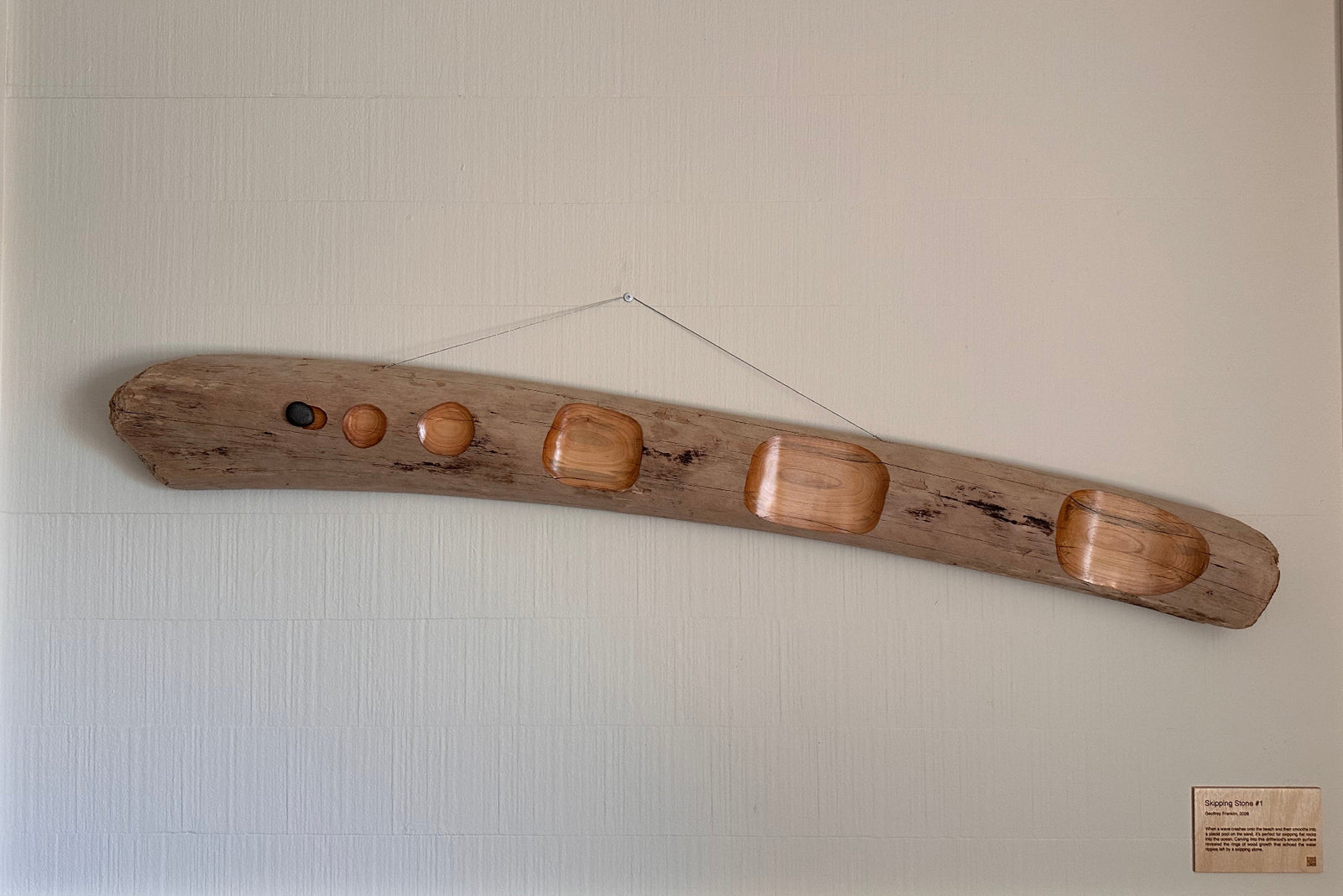
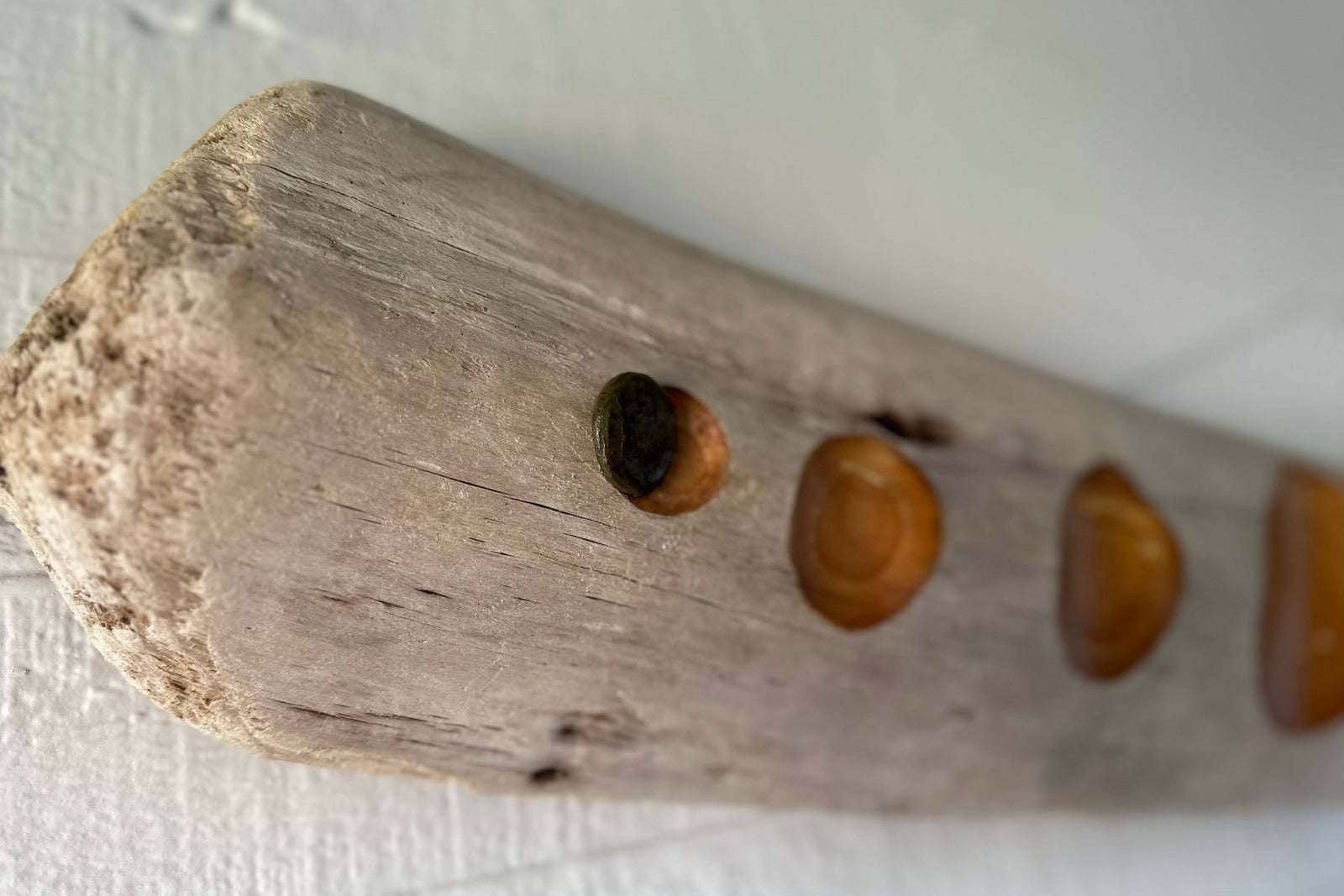
When a wave crashes onto the beach and then smooths into a placid pool on the sand, it’s perfect for skipping flat rocks into the ocean. Carving into this driftwood’s smooth surface revealed the rings of wood growth that echoed the water ripples left by a skipping stone.
When a wave crashes onto the beach and then smooths into a placid pool on the sand, it’s perfect for skipping flat rocks into the ocean. Carving into this driftwood’s smooth surface revealed the rings of wood growth that echoed the water ripples left by a skipping stone.


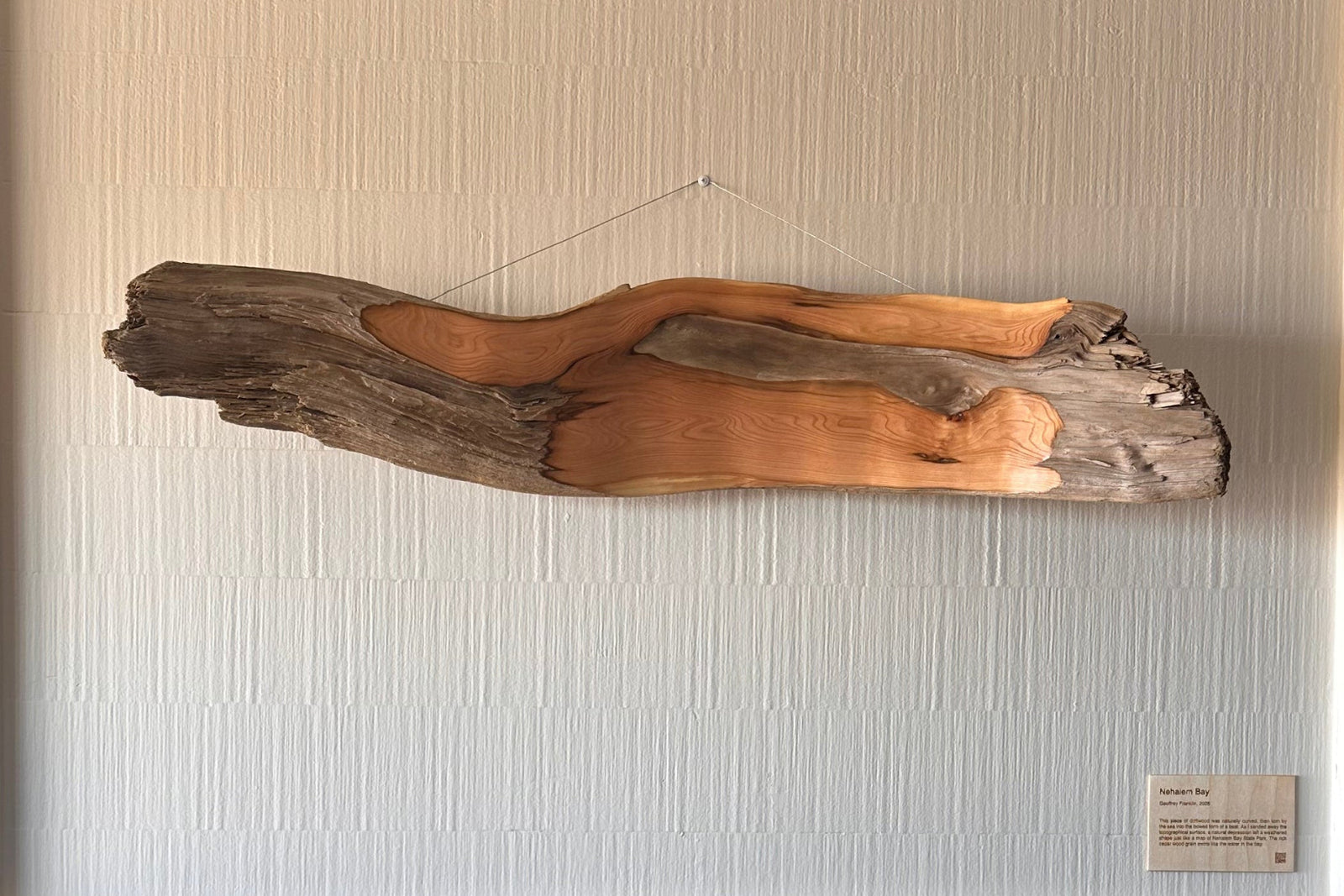
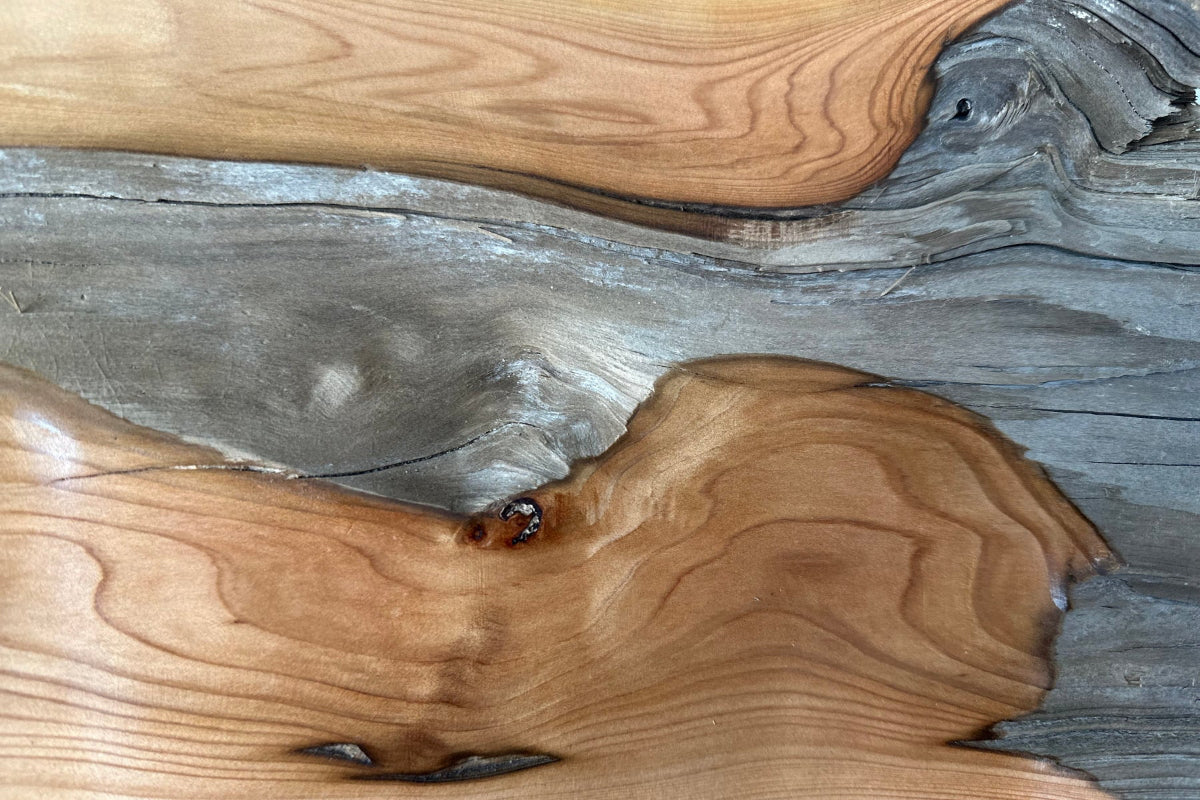
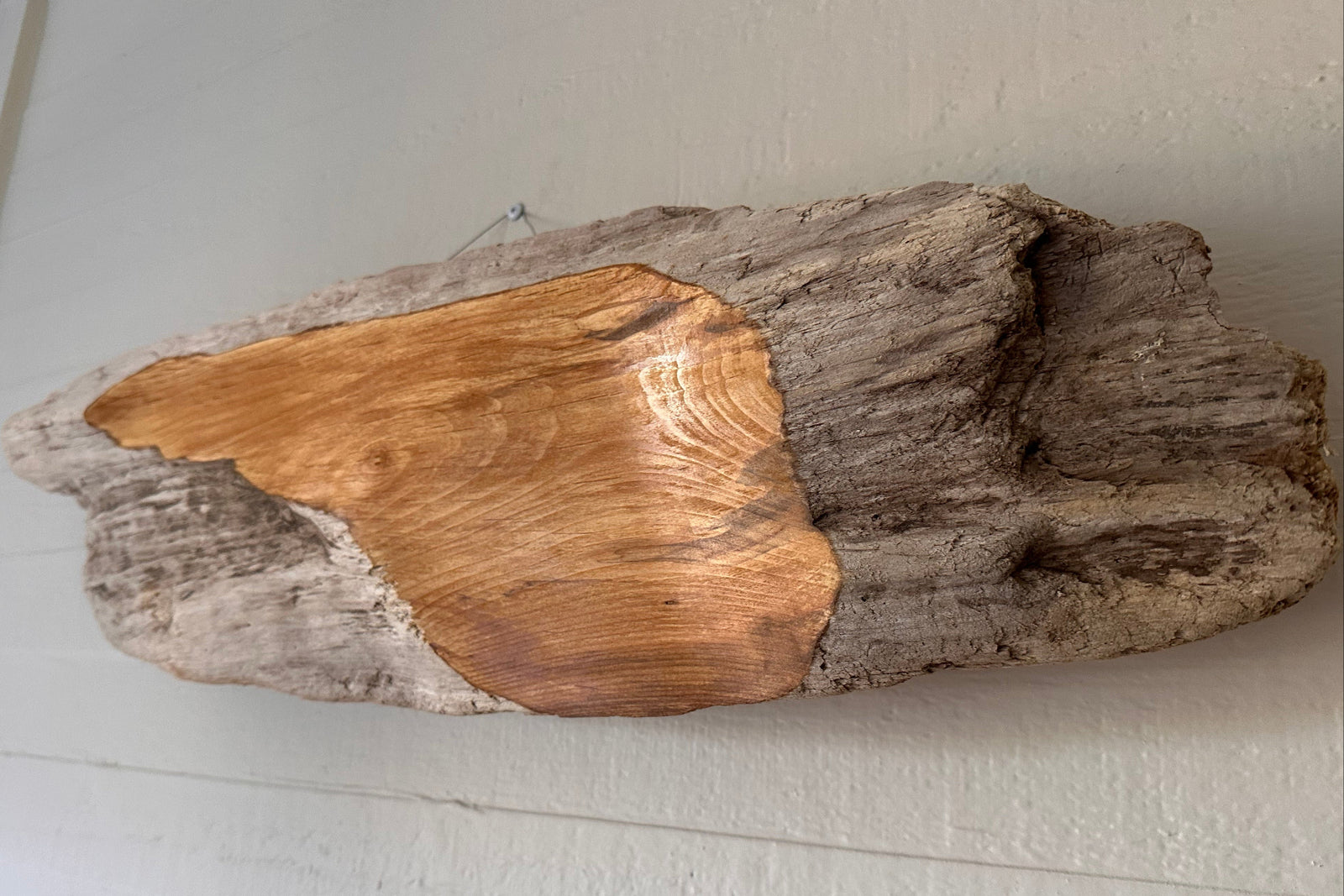
This piece of driftwood was naturally curved, then torn by the sea into the bowed form of a boat. As I sanded away the topographical surface, a natural depression left a weathered shape just like a map of Nehalem Bay State Park. The rich cedar wood grain swirls like the water in the bay.
This piece of driftwood was naturally curved, then torn by the sea into the bowed form of a boat. As I sanded away the topographical surface, a natural depression left a weathered shape just like a map of Nehalem Bay State Park. The rich cedar wood grain swirls like the water in the bay.


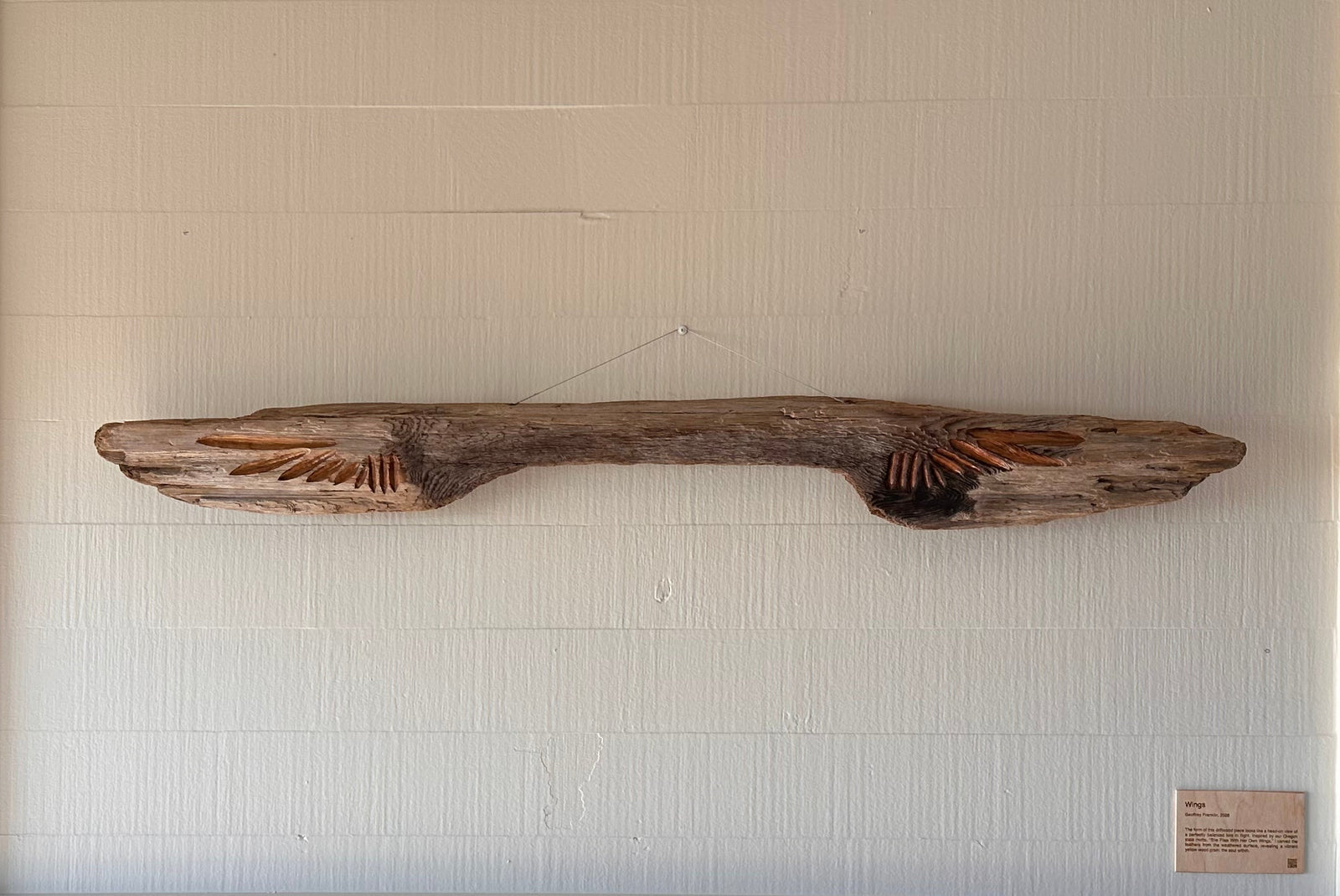
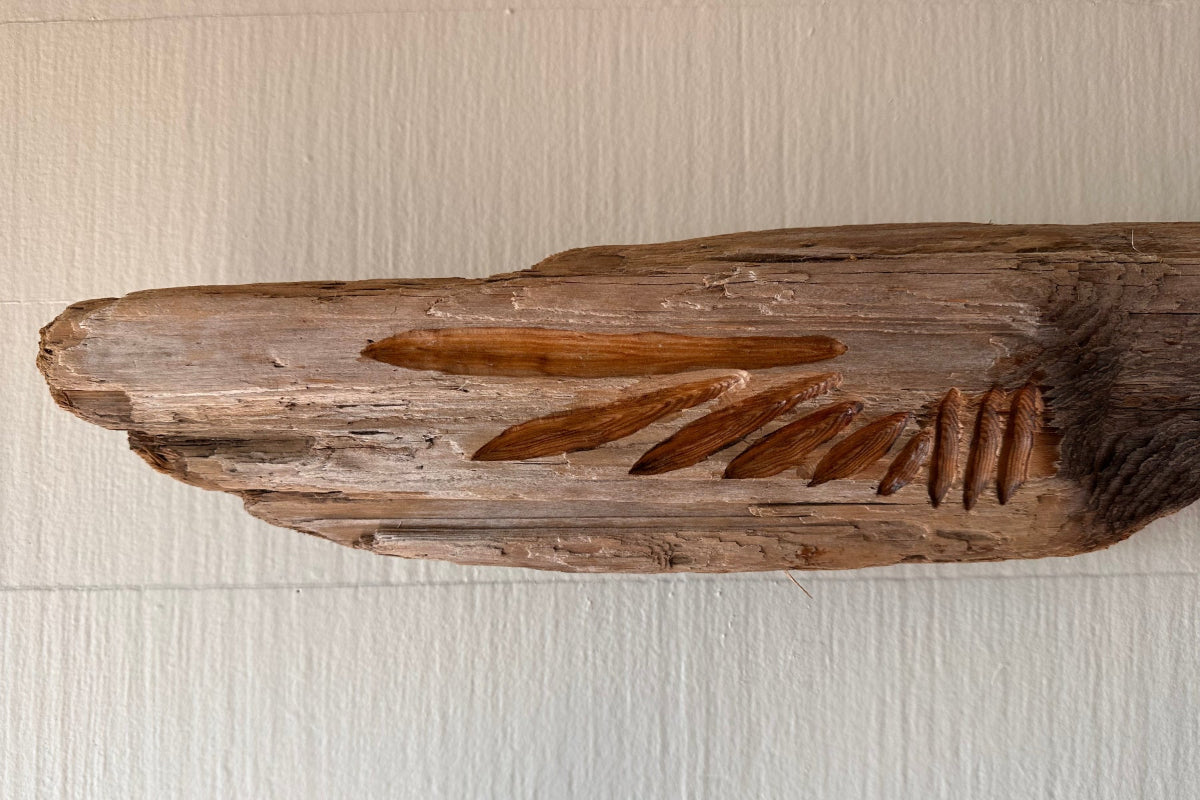
The form of this driftwood piece looks like a head-on view of a perfectly balanced bird in flight. Inspired by our Oregon state motto, “She Flies With Her Own Wings,” I carved the feathers from the weathered surface, revealing a vibrant yellow wood grain: the soul within.
The form of this driftwood piece looks like a head-on view of a perfectly balanced bird in flight. Inspired by our Oregon state motto, “She Flies With Her Own Wings,” I carved the feathers from the weathered surface, revealing a vibrant yellow wood grain: the soul within.


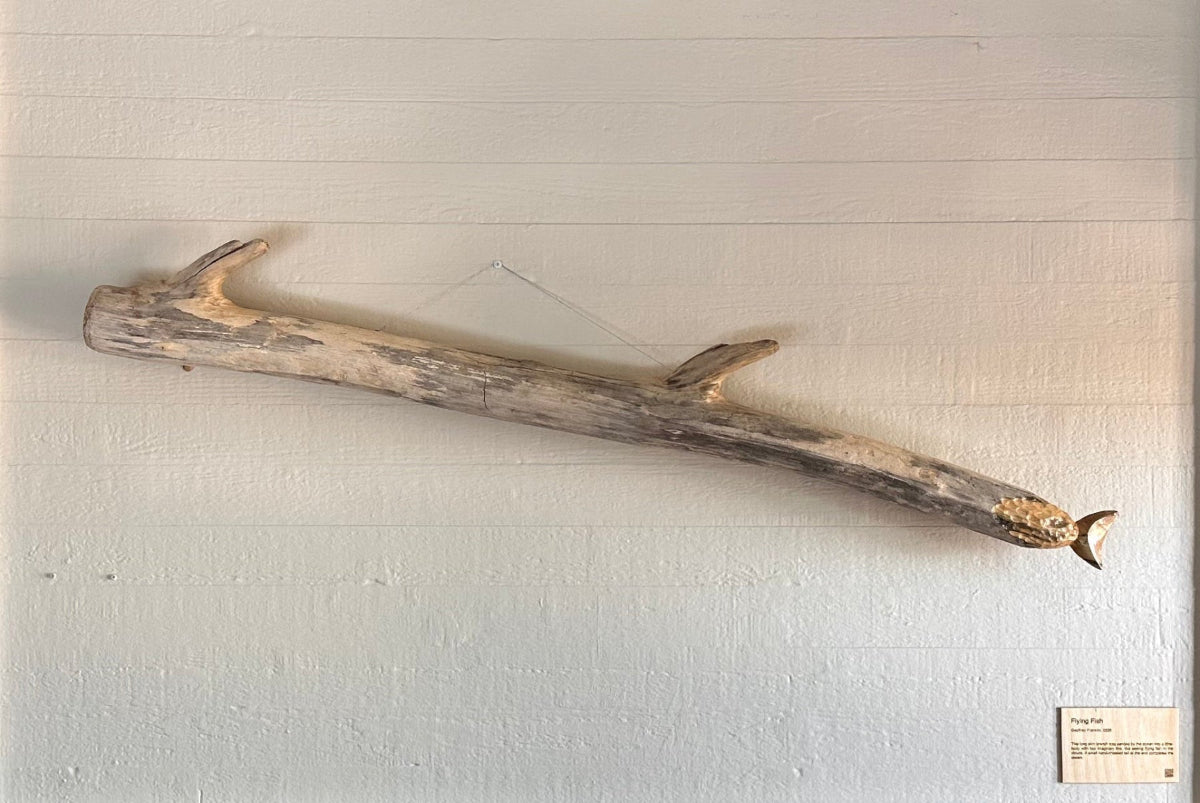
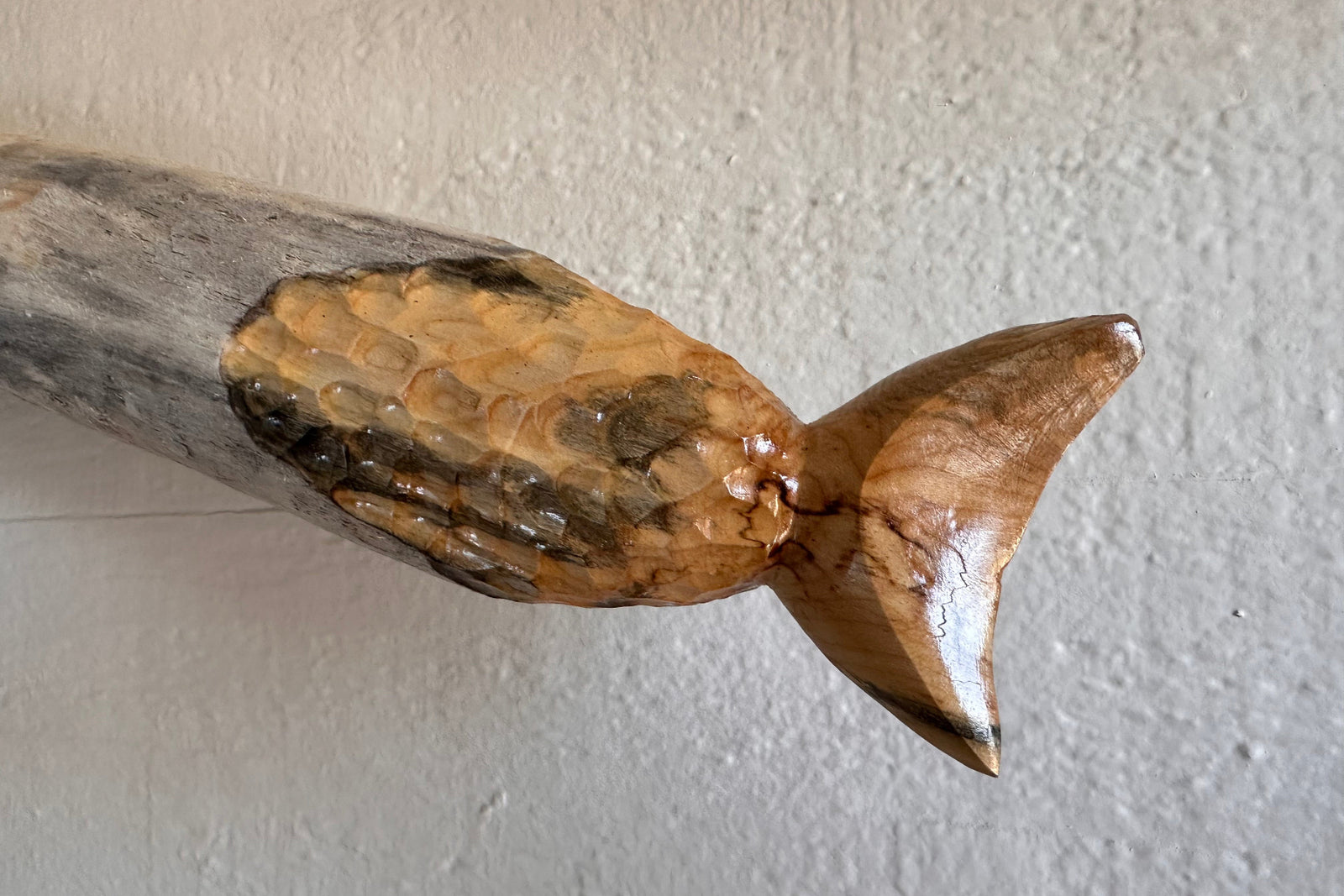
This long slim branch was sanded by the ocean into a lithe body with two imaginary fins, like seeing flying fish in the clouds. A small hand-chiseled tail at the end completes the dream.
This long slim branch was sanded by the ocean into a lithe body with two imaginary fins, like seeing flying fish in the clouds. A small hand-chiseled tail at the end completes the dream.


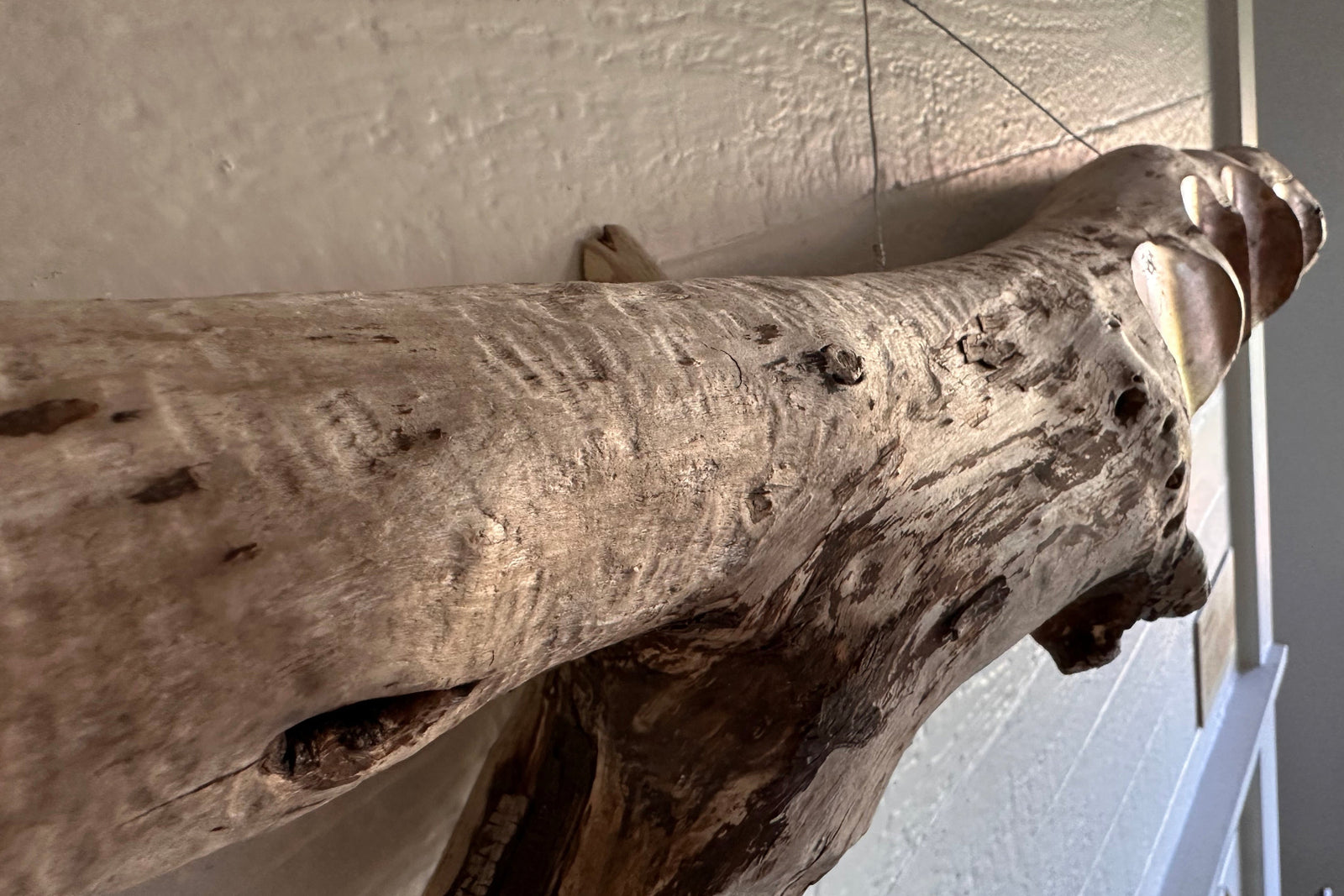
This piece of driftwood was washed ashore into a pile of broken branches. As I lifted it up for inspection, it pointed back to the ocean. Whence it came. Whence all life came. The shape of the sanded and restored straw-colored wood beneath mirrors the overall form. The beach, this way.
This piece of driftwood was washed ashore into a pile of broken branches. As I lifted it up for inspection, it pointed back to the ocean. Whence it came. Whence all life came. The shape of the sanded and restored straw-colored wood beneath mirrors the overall form. The beach, this way.


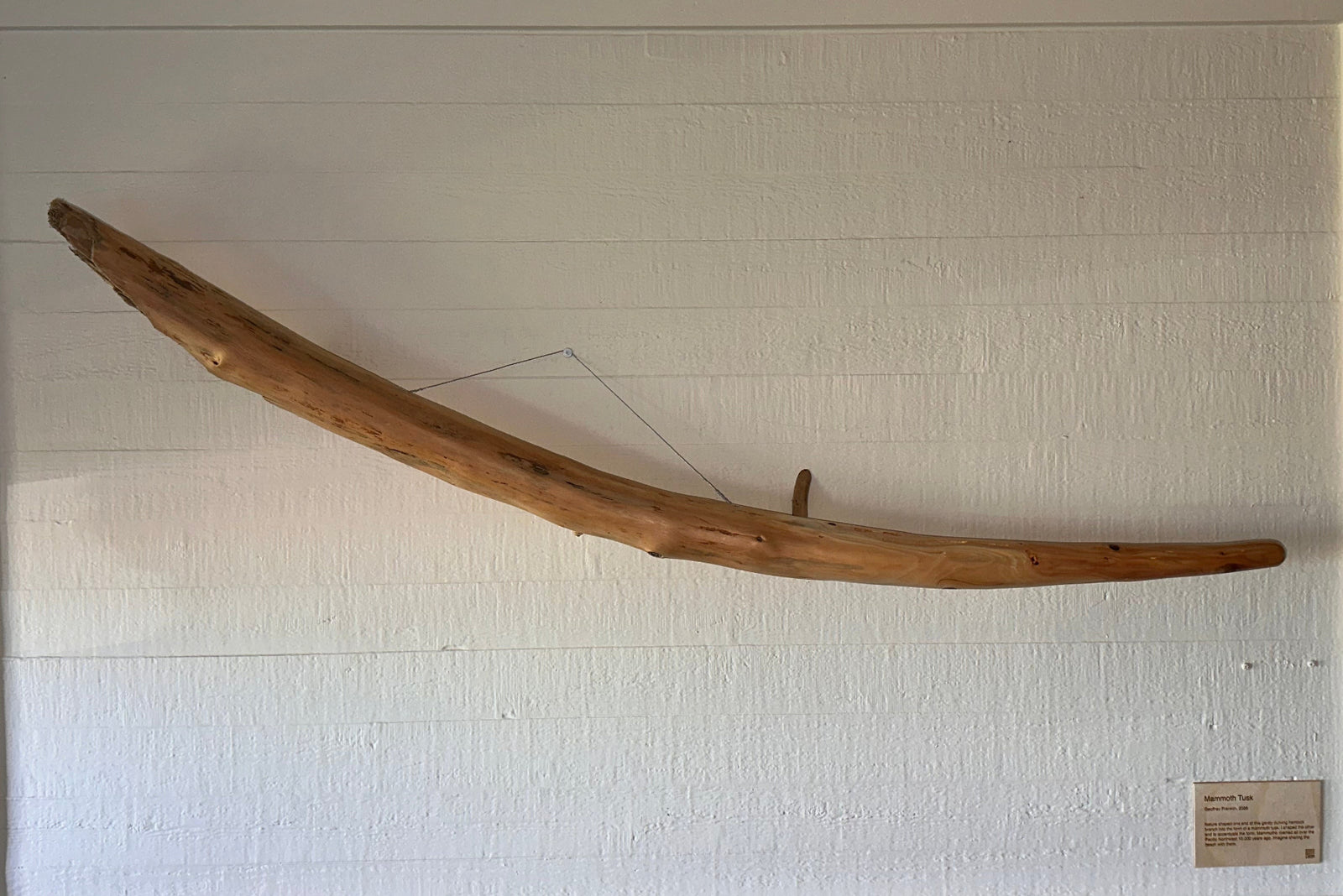
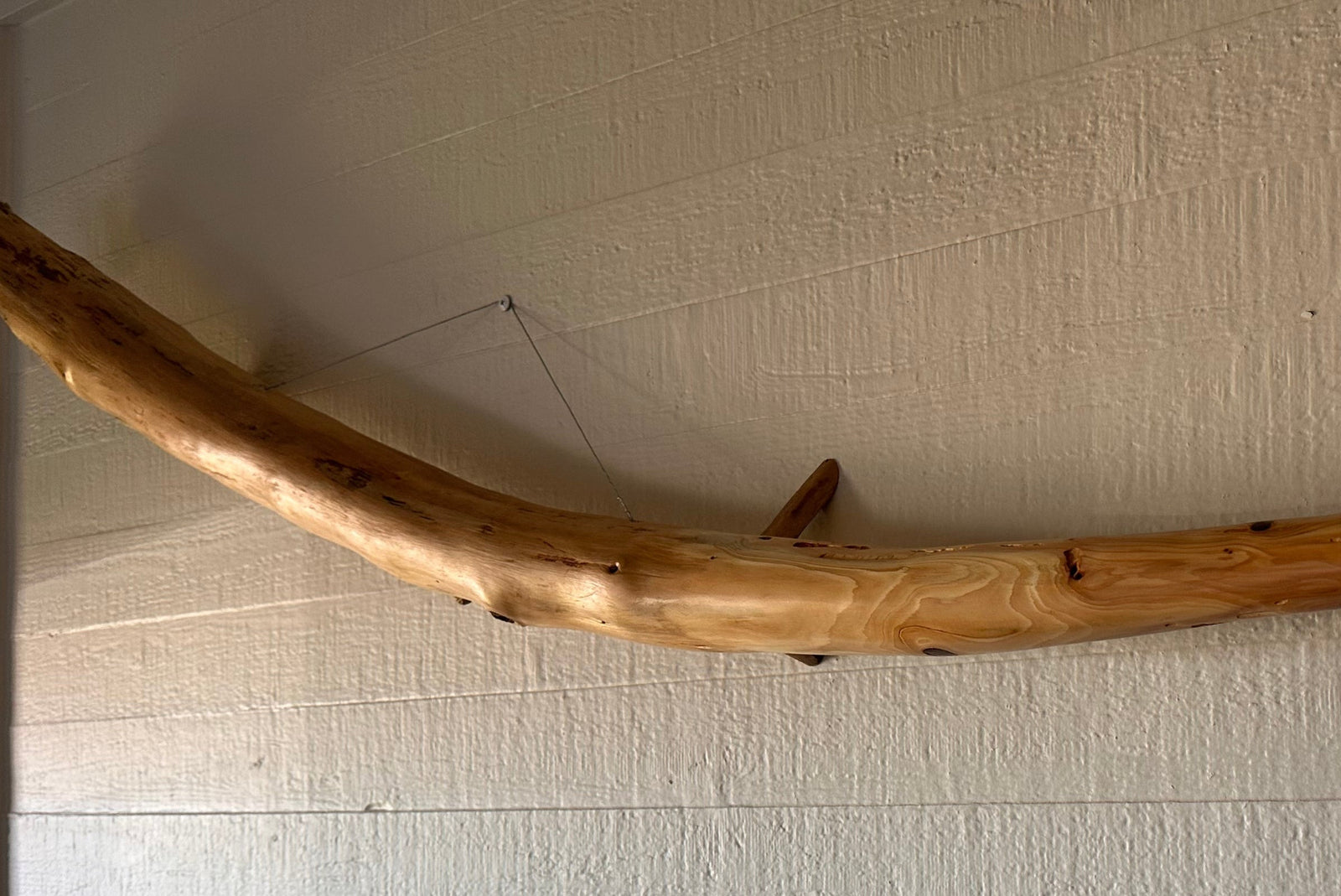
Nature shaped one end of this gently curving hemlock branch into the form of a mammoth tusk. I shaped the other end to accentuate the form. Mammoths roamed all over the Pacific Northwest 15,000 years ago. Imagine sharing the beach with them.
Nature shaped one end of this gently curving hemlock branch into the form of a mammoth tusk. I shaped the other end to accentuate the form. Mammoths roamed all over the Pacific Northwest 15,000 years ago. Imagine sharing the beach with them.


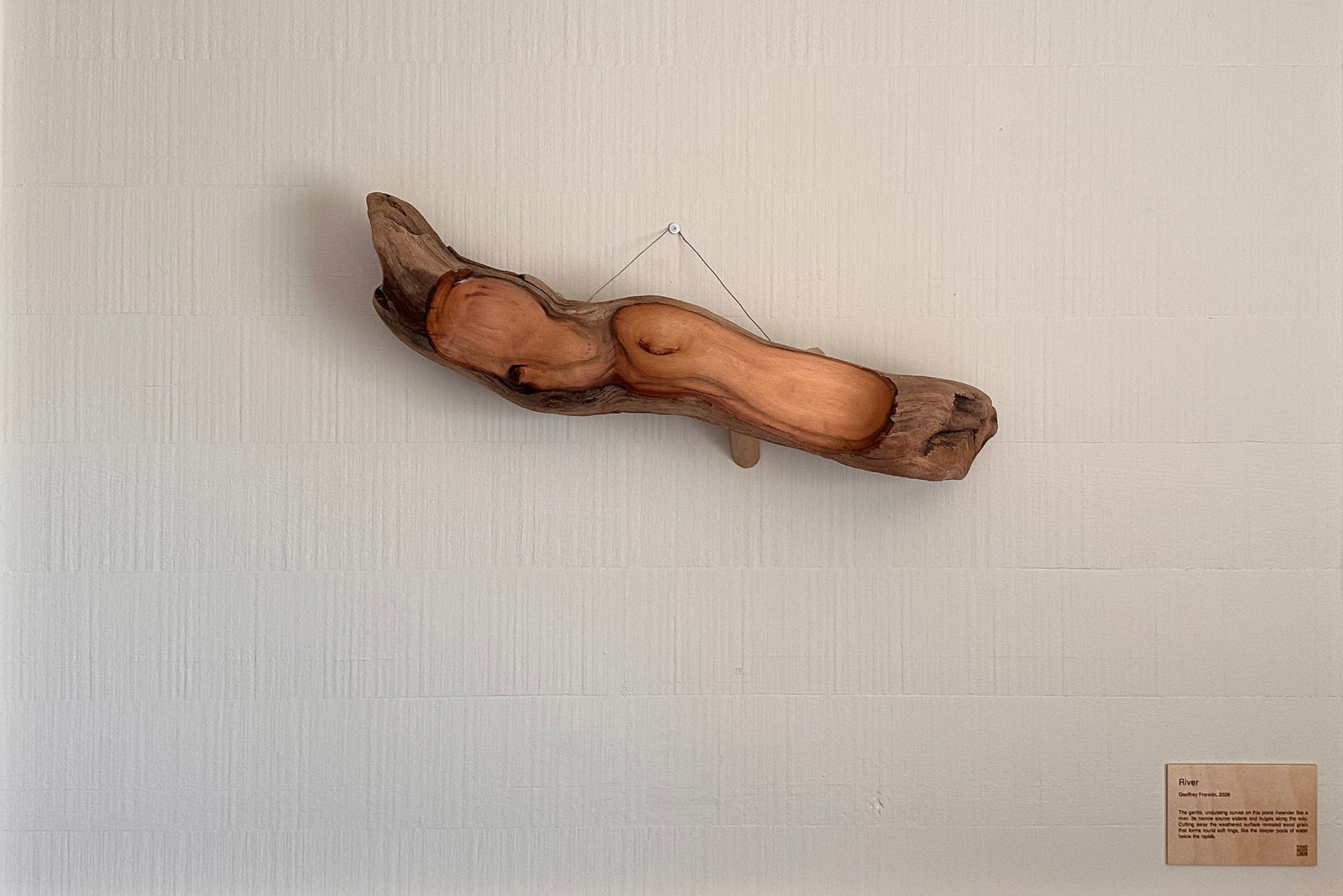
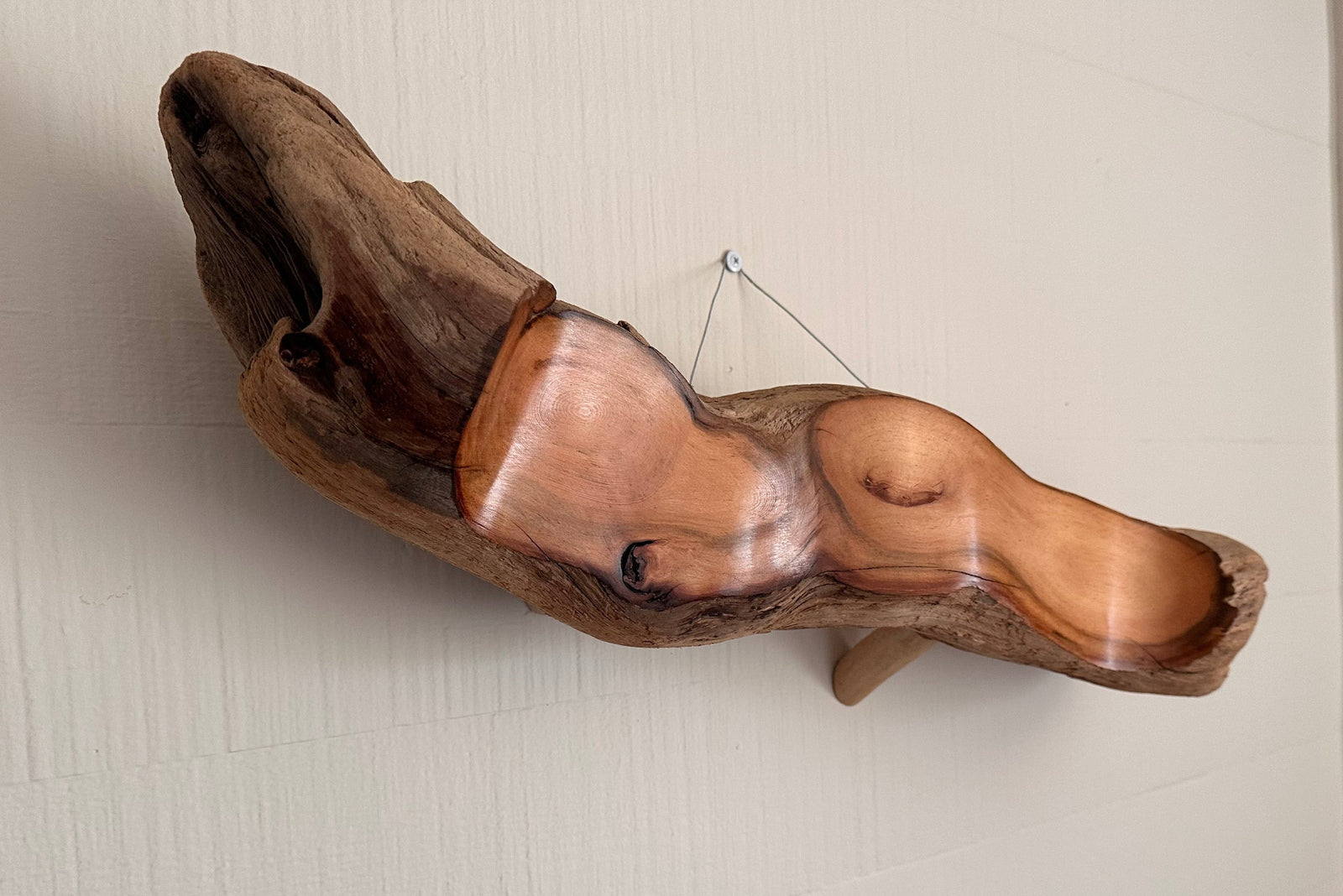
The gentle, undulating curves on this piece meander like a river. Its narrow source widens and bulges along the way. Cutting away the weathered surface revealed wood grain that forms round soft rings, like the deeper pools of water below the rapids.
The gentle, undulating curves on this piece meander like a river. Its narrow source widens and bulges along the way. Cutting away the weathered surface revealed wood grain that forms round soft rings, like the deeper pools of water below the rapids.


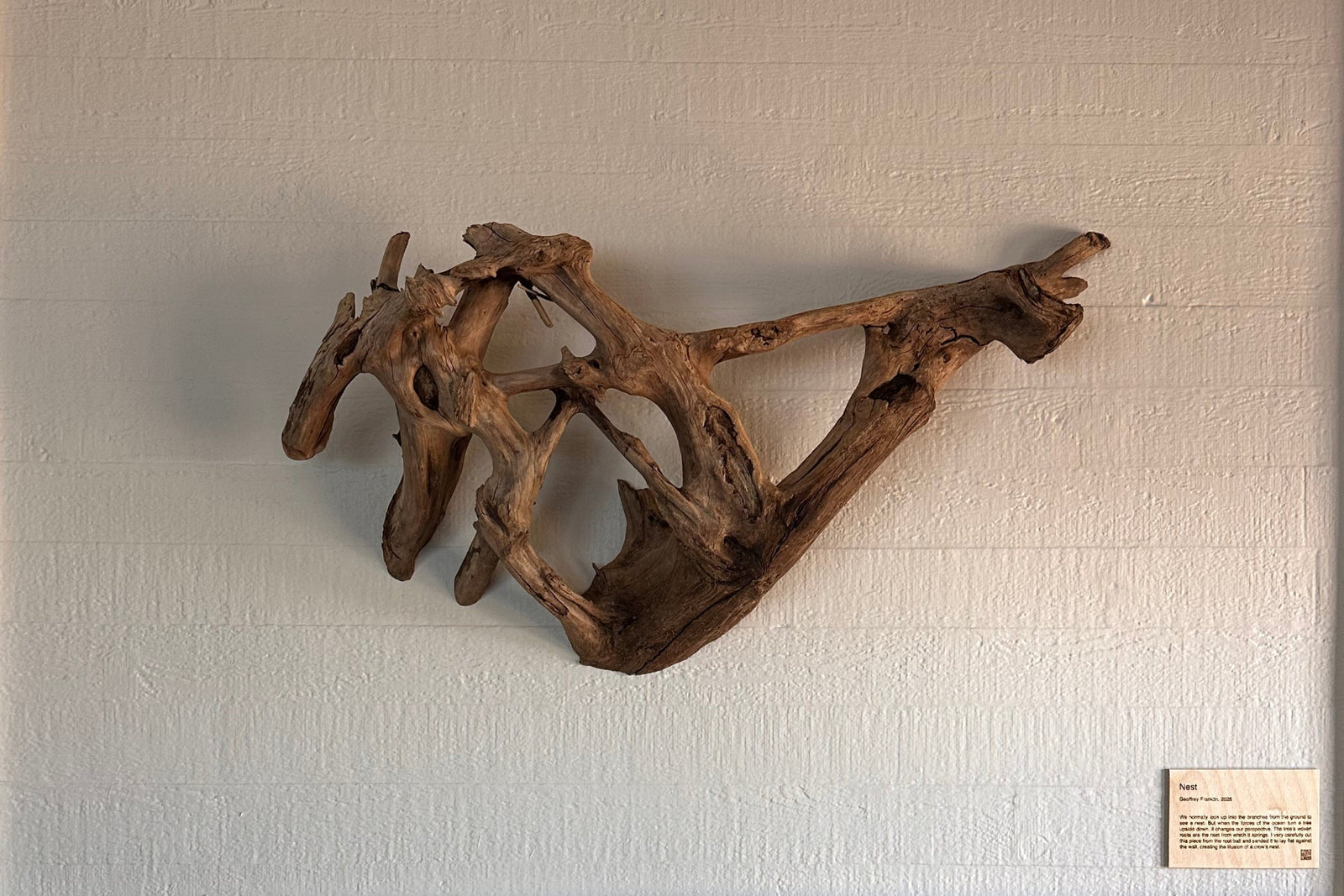
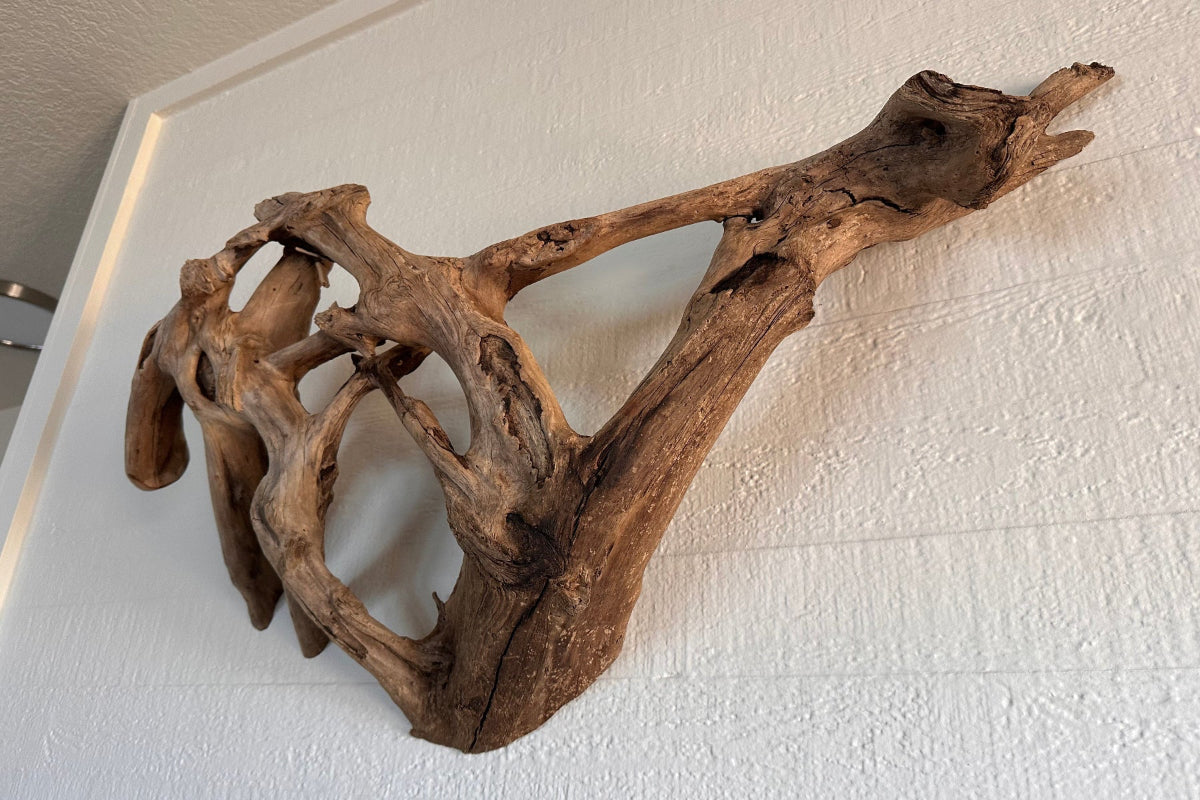
We normally look up into the branches from the ground to see a nest. But when the forces of the ocean turn a tree upside down, it changes our perspective. The tree’s woven roots are the nest from which it springs. I very carefully cut this piece from the root ball and sanded it to lay flat against the wall, creating the illusion of a crow’s nest.
We normally look up into the branches from the ground to see a nest. But when the forces of the ocean turn a tree upside down, it changes our perspective. The tree’s woven roots are the nest from which it springs. I very carefully cut this piece from the root ball and sanded it to lay flat against the wall, creating the illusion of a crow’s nest.


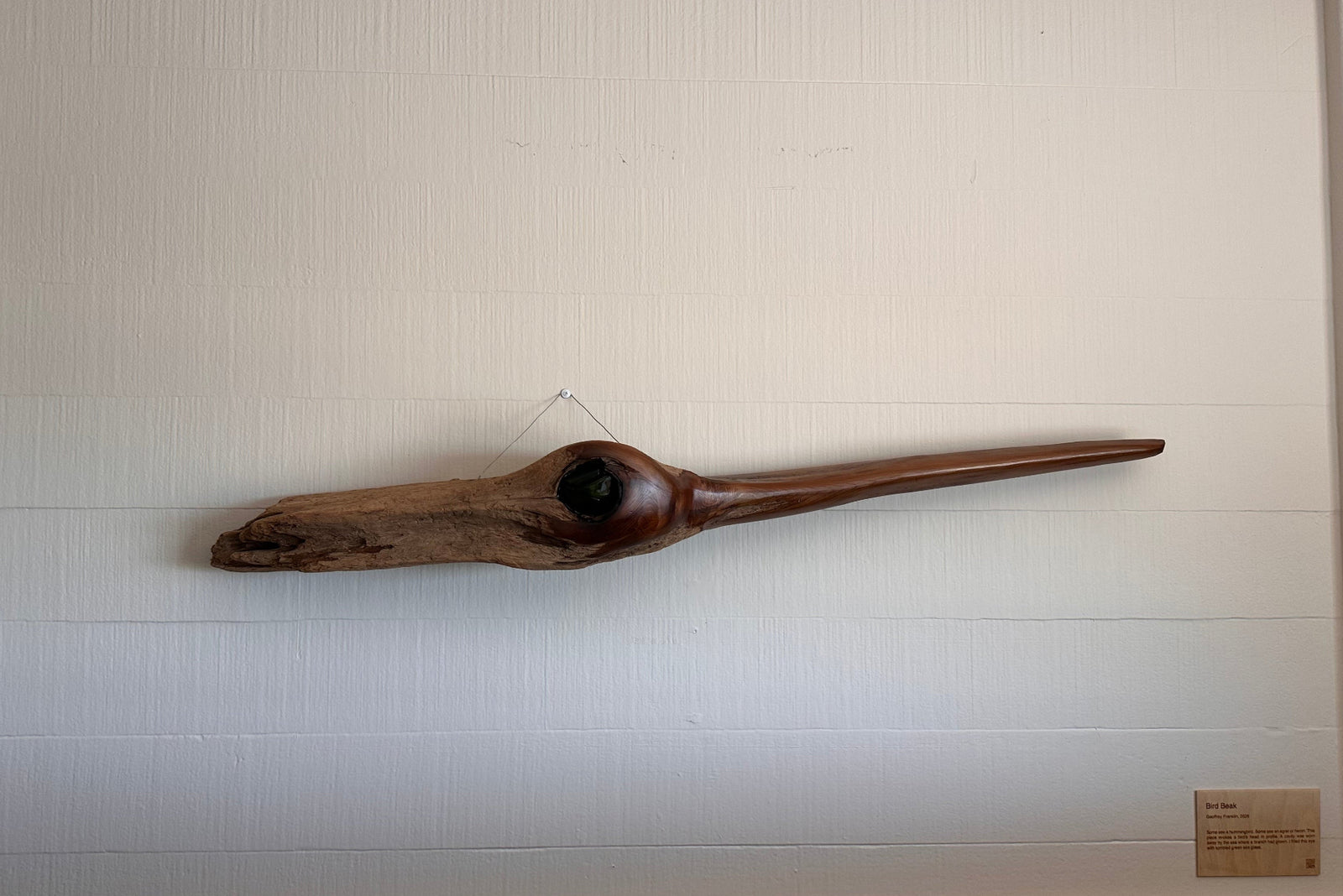
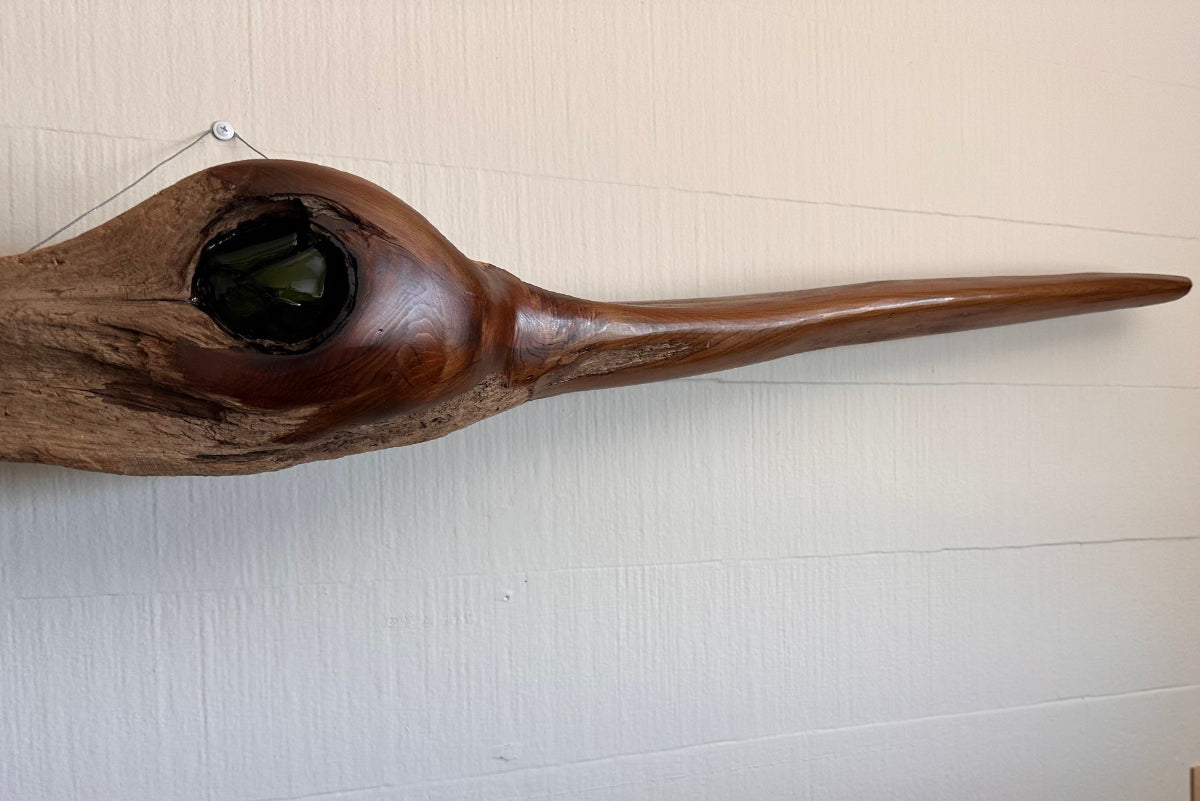
Some see a hummingbird. Some see an egret or heron. This piece evokes a bird’s head in profile. A cavity was worn away by the sea where a branch had grown. I filled this eye with tumbled green sea glass.
Some see a hummingbird. Some see an egret or heron. This piece evokes a bird’s head in profile. A cavity was worn away by the sea where a branch had grown. I filled this eye with tumbled green sea glass.


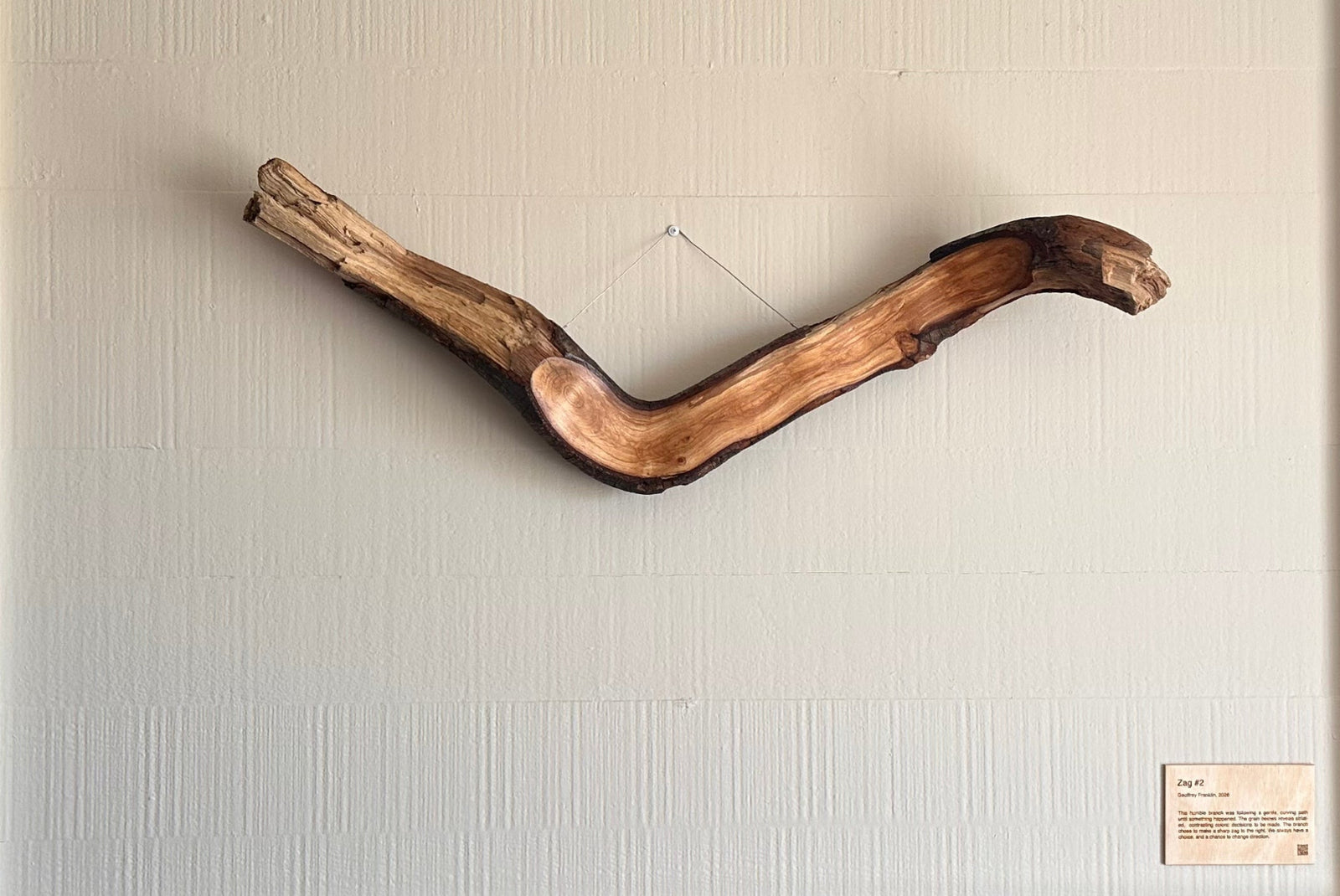
This humble branch was following a gentle, curving path until something happened. The grain belows reveals striated, contrasting colors: decisions to be made. The branch chose to make a sharp zag to the right or left. We always have a choice, and a chance to change direction.
This humble branch was following a gentle, curving path until something happened. The grain belows reveals striated, contrasting colors: decisions to be made. The branch chose to make a sharp zag to the right or left. We always have a choice, and a chance to change direction.


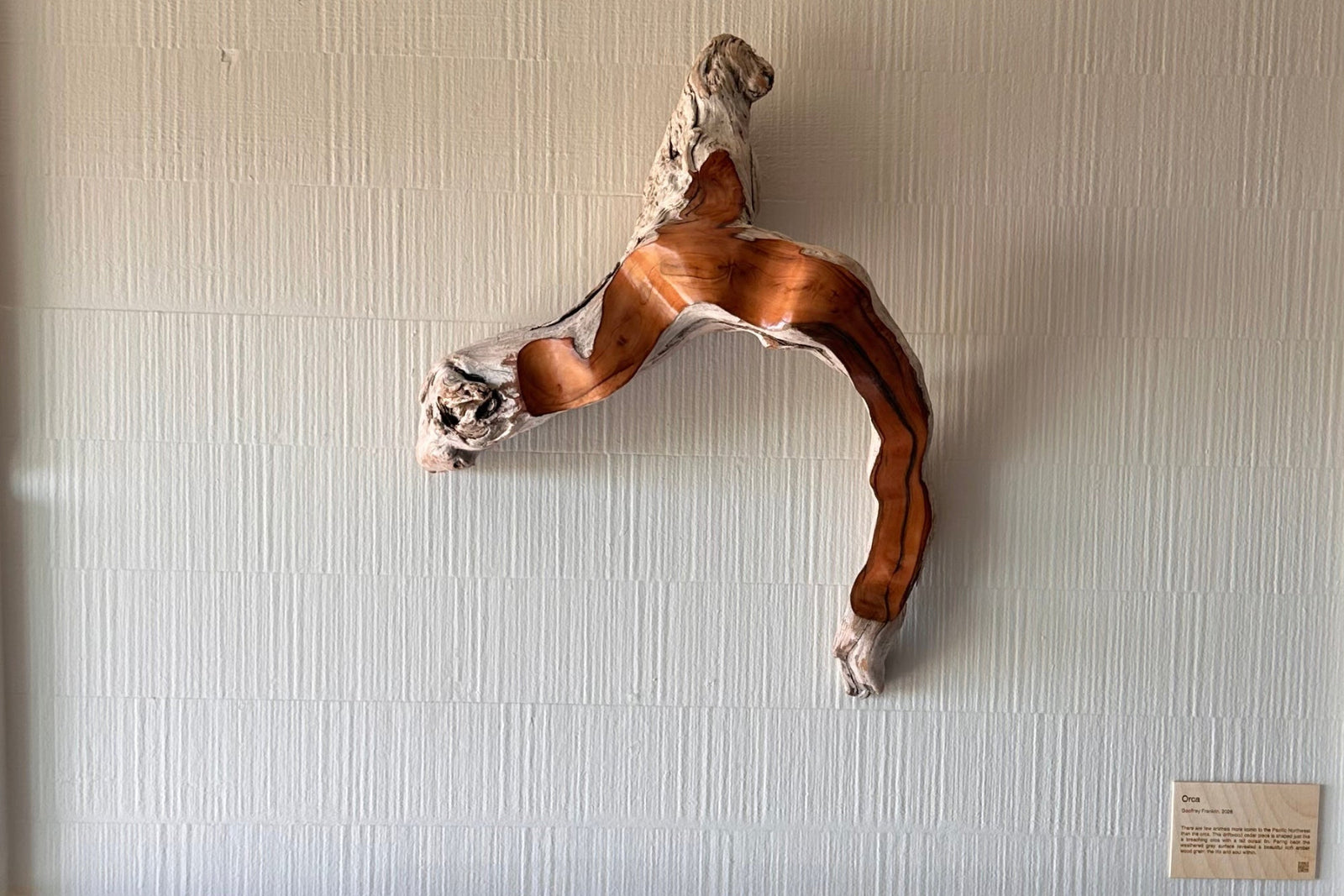
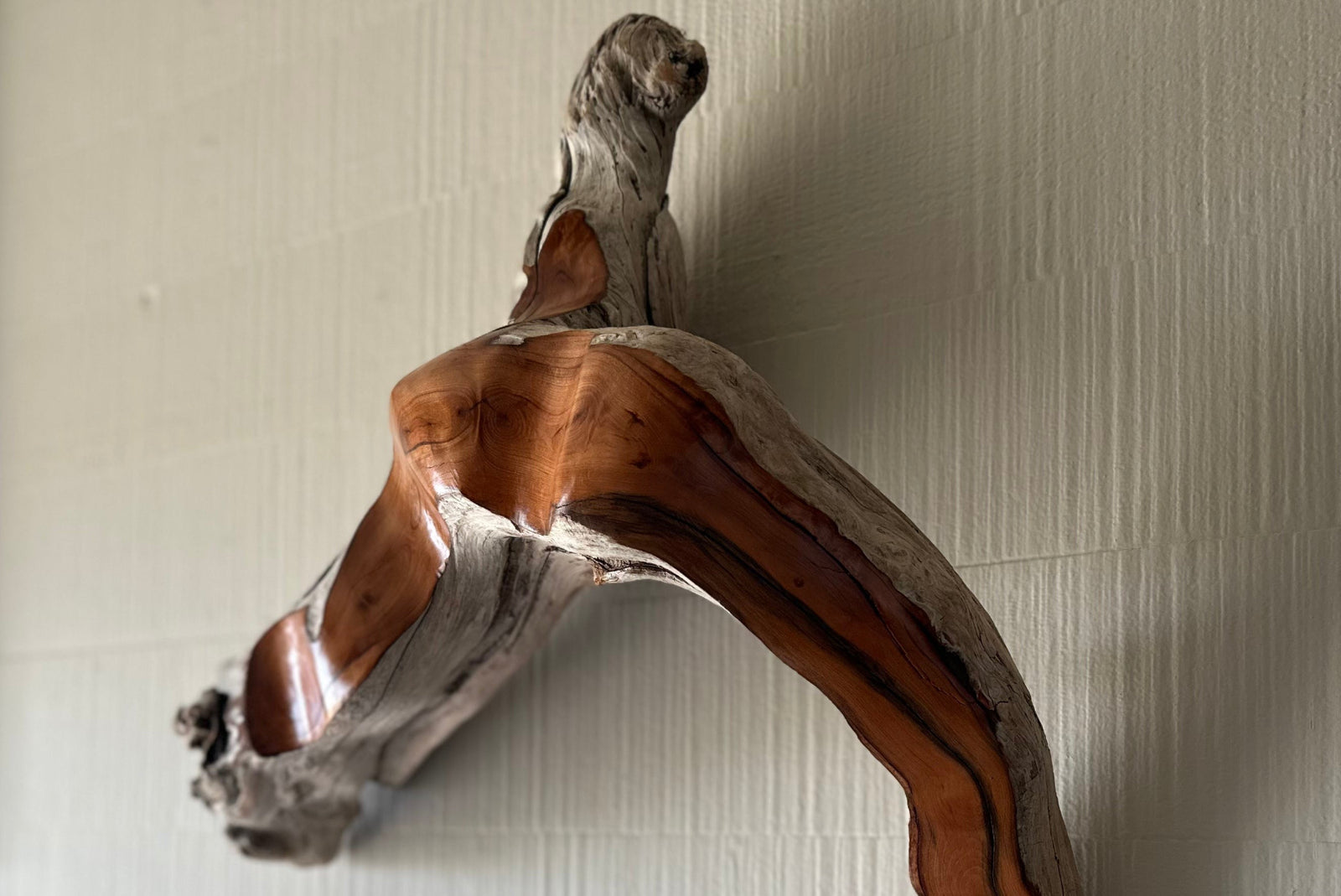
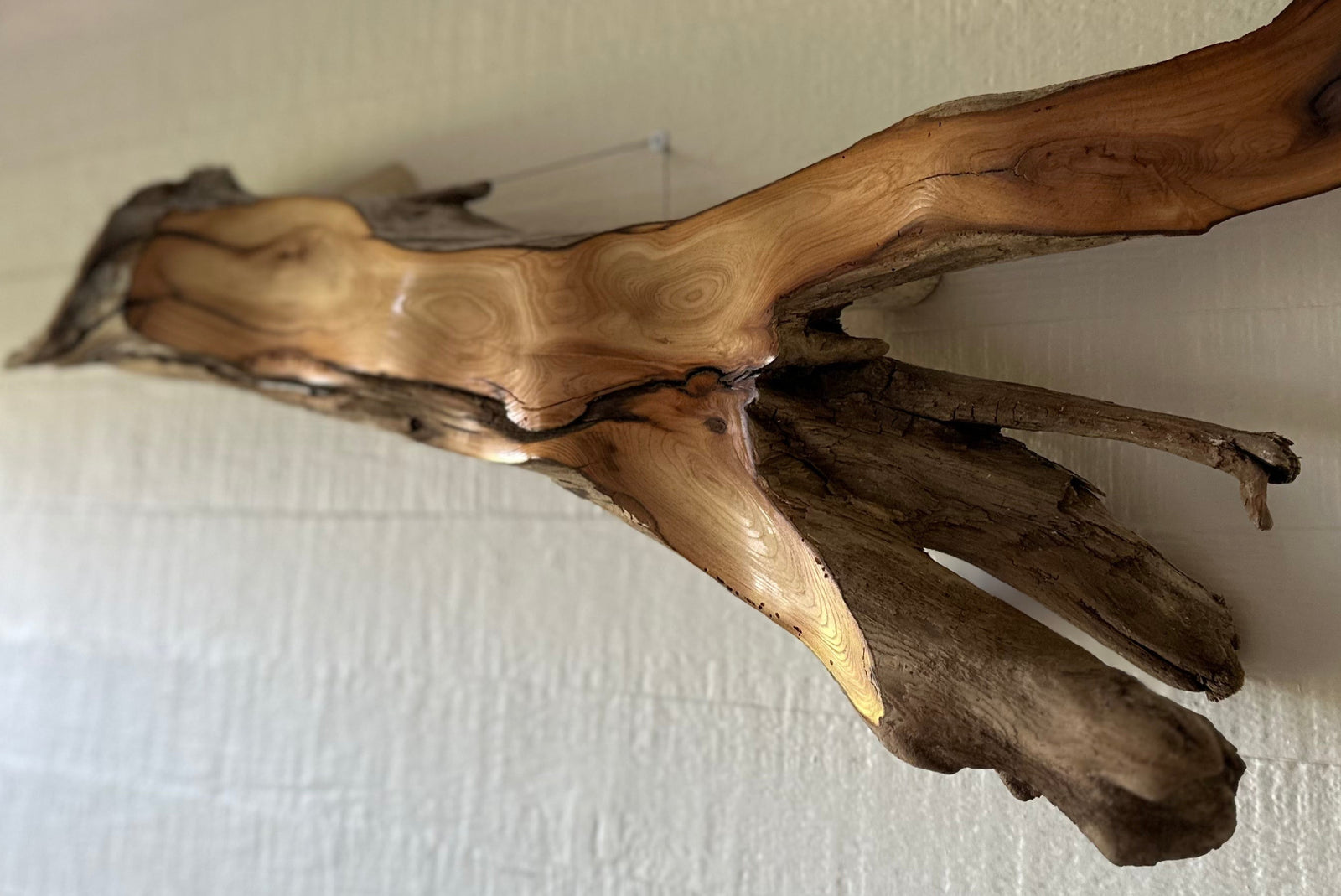
There are few animals more iconic to the Pacific Northwest than the orca. This driftwood cedar piece is shaped just like a breaching orca with a tall dorsal fin. Paring back the weathered gray surface revealed a beautiful rich amber wood grain: the life and soul within.
There are few animals more iconic to the Pacific Northwest than the orca. This driftwood cedar piece is shaped just like a breaching orca with a tall dorsal fin. Paring back the weathered gray surface revealed a beautiful rich amber wood grain: the life and soul within.


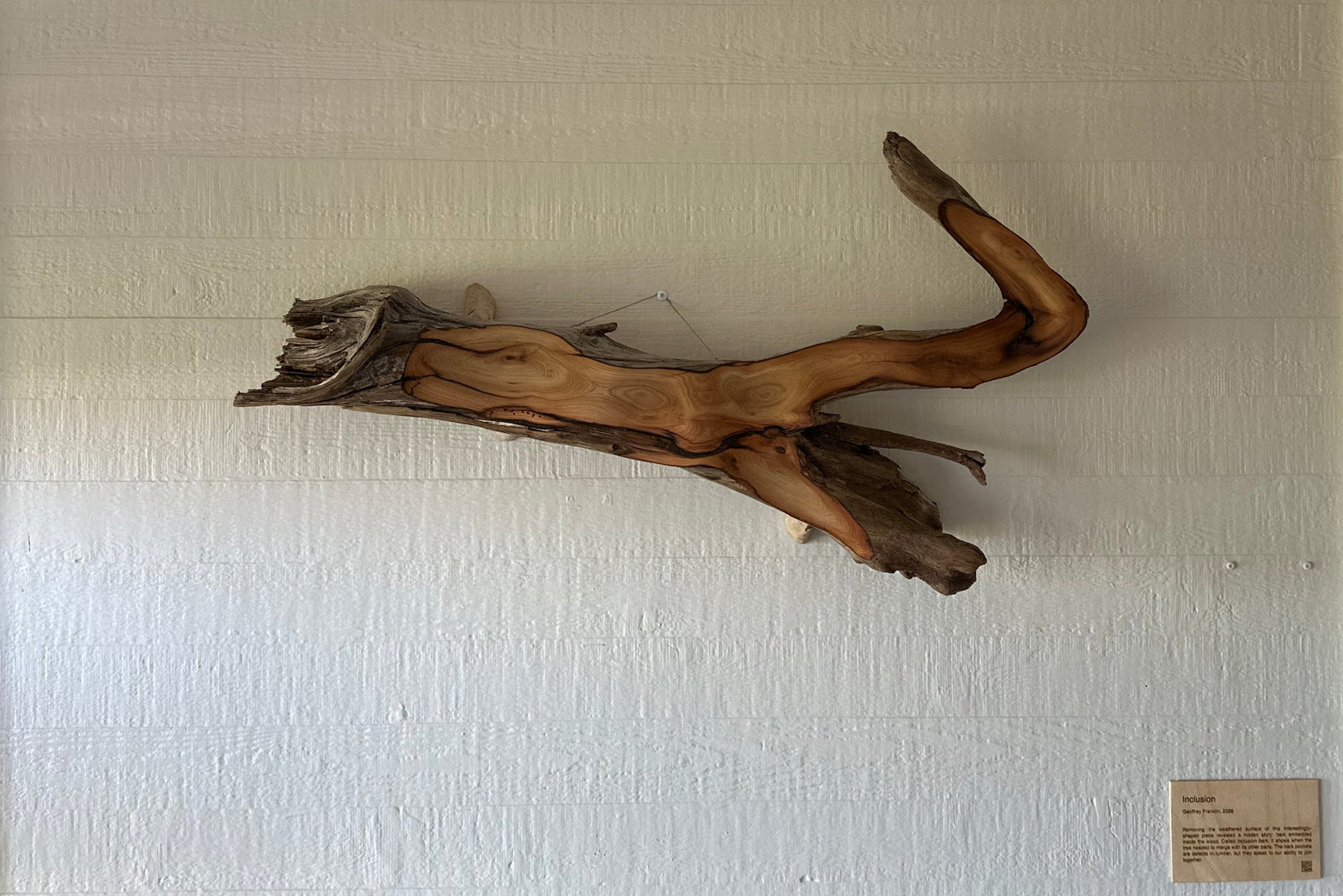
Removing the weathered surface of this interestingly-shaped piece revealed a hidden story: bark embedded inside the wood. Called inclusion bark, it shows when the tree needed to merge with its other parts. The bark pockets are defects in lumber, but they speak to our ability to join together.
Removing the weathered surface of this interestingly-shaped piece revealed a hidden story: bark embedded inside the wood. Called inclusion bark, it shows when the tree needed to merge with its other parts. The bark pockets are defects in lumber, but they speak to our ability to join together.


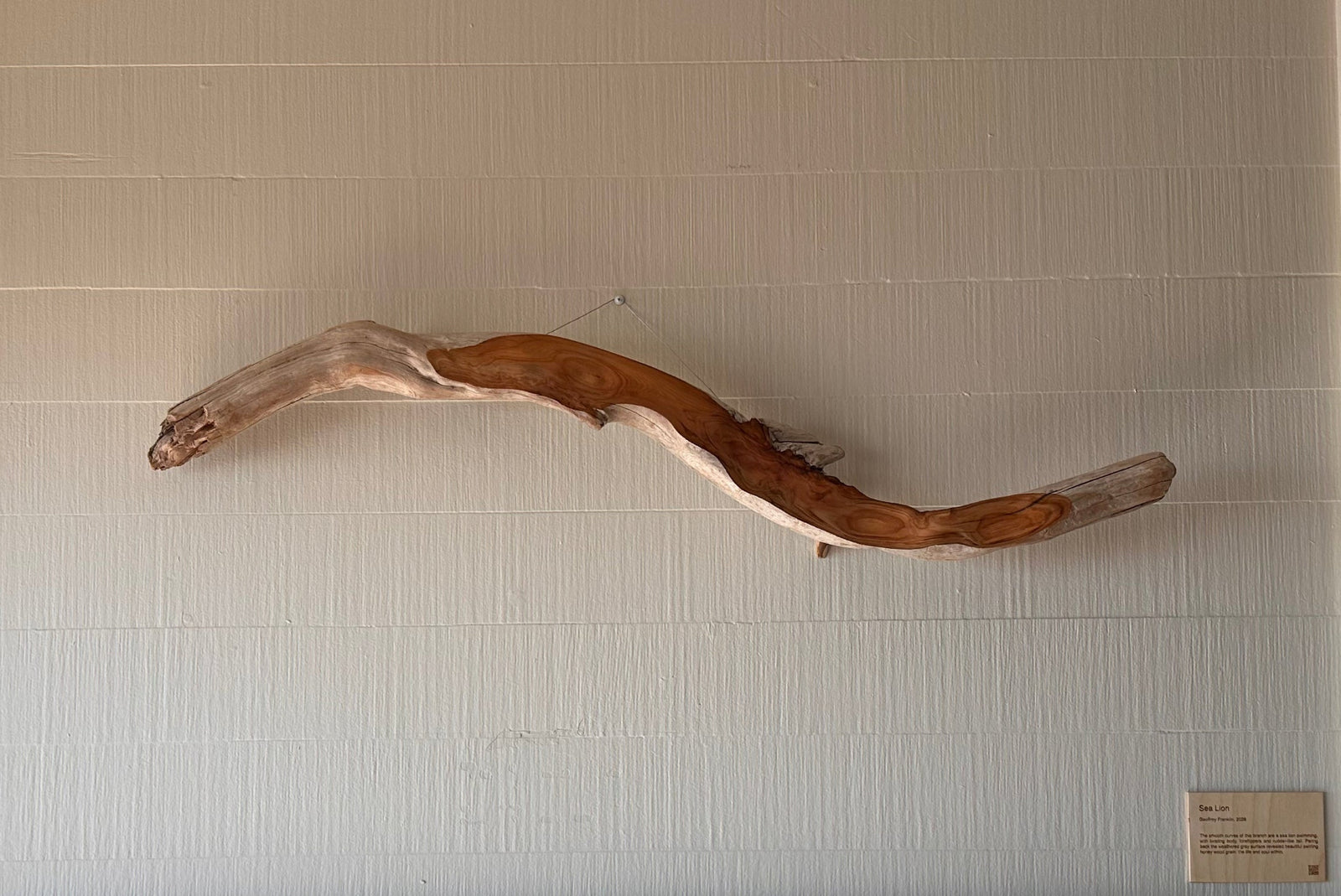
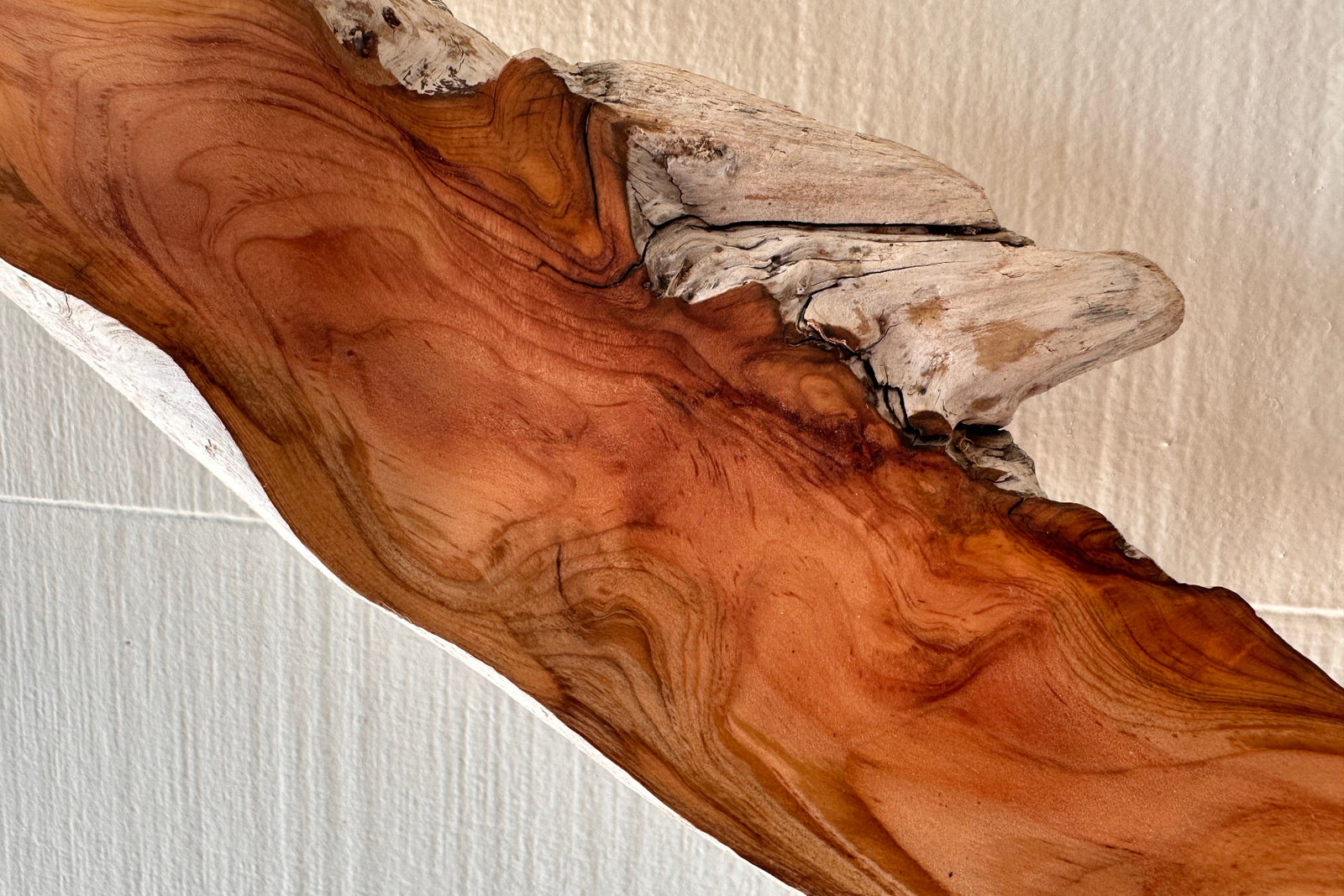
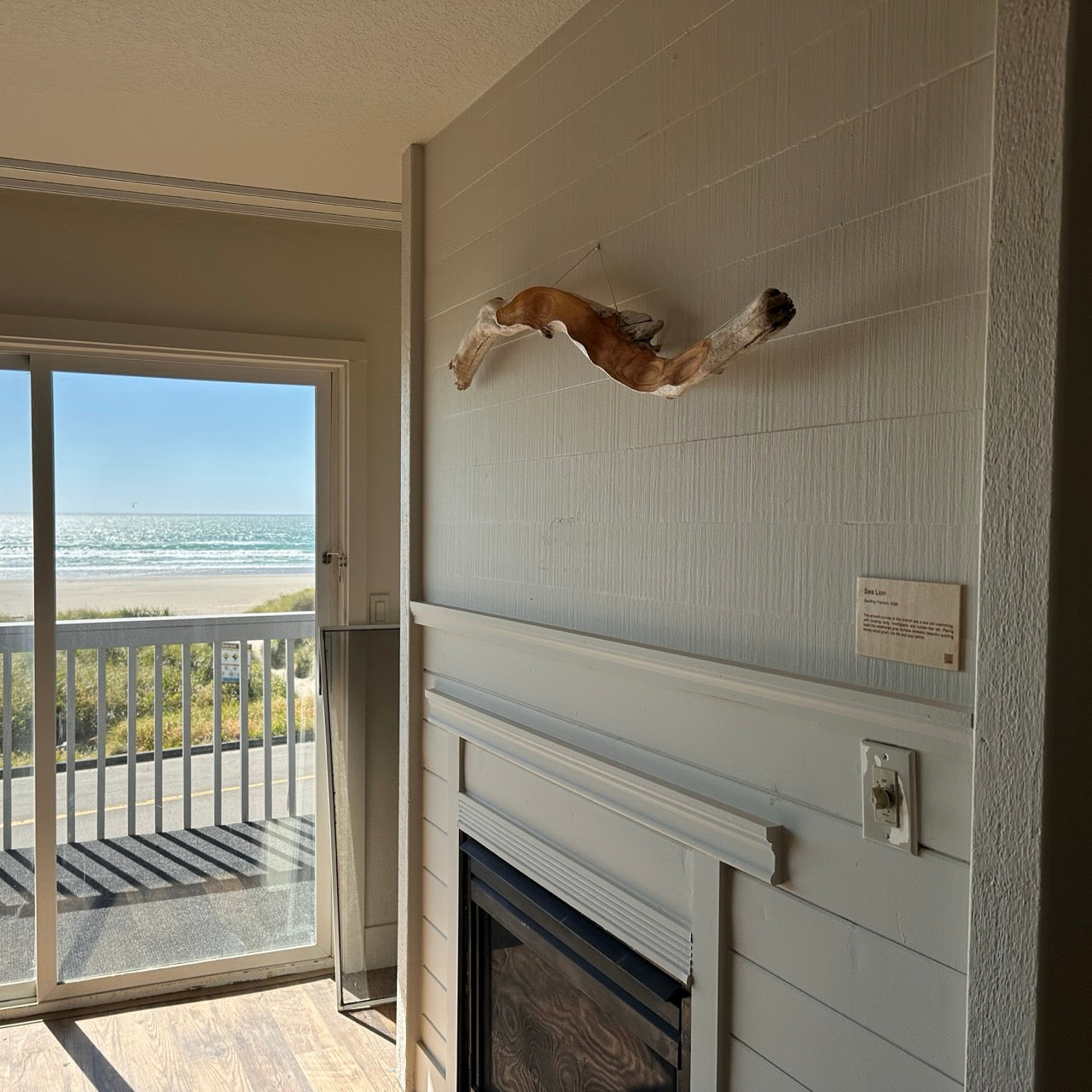
The smooth curves of this branch are a sea lion swimming, with twisting body, foreflippers and rudder-like tail. Paring back the weathered gray surface revealed beautiful swirling honey wood grain: the life and soul within.
The smooth curves of this branch are a sea lion swimming, with twisting body, foreflippers and rudder-like tail. Paring back the weathered gray surface revealed beautiful swirling honey wood grain: the life and soul within.


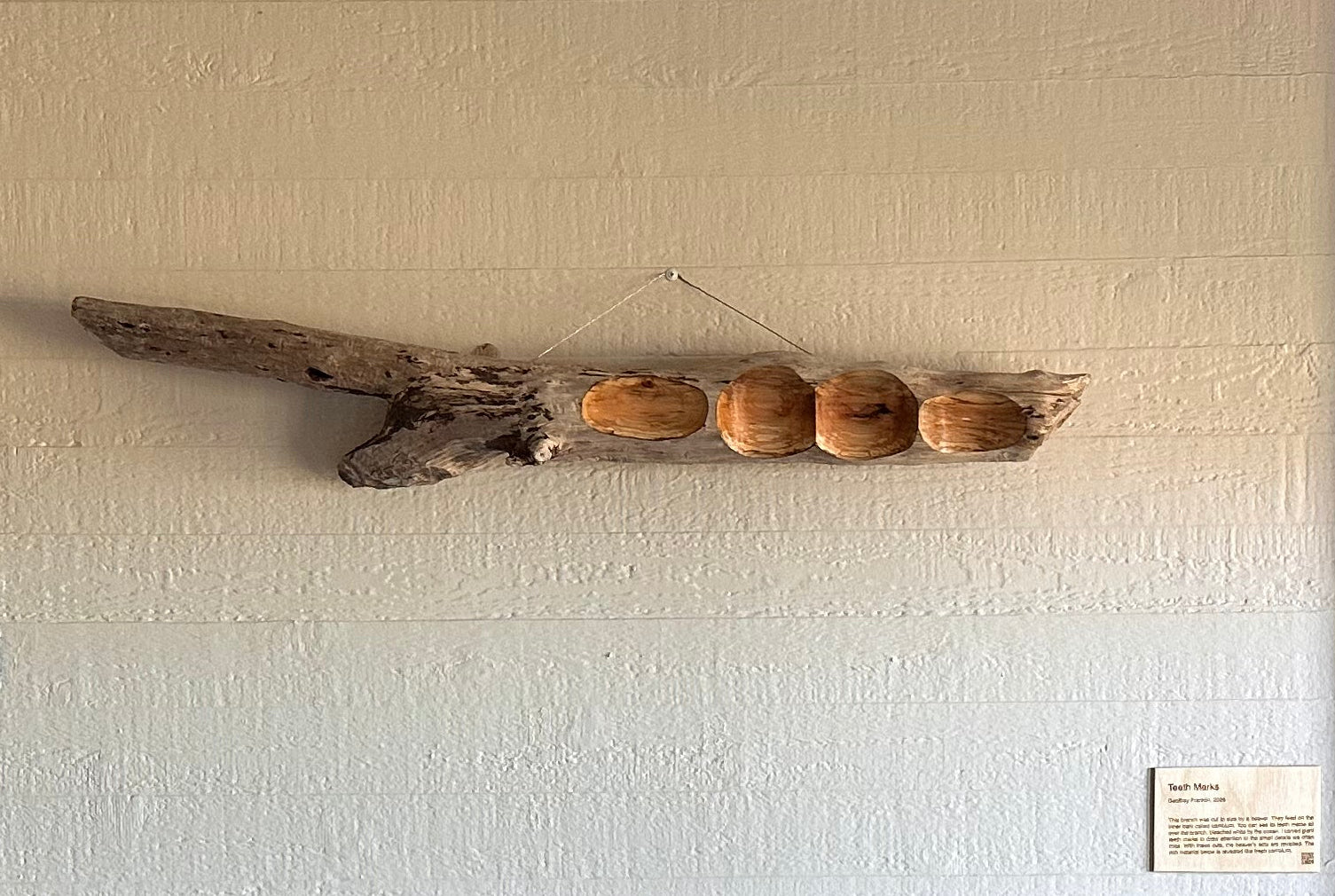
This branch was cut to size by a beaver. They feed on the inner bark called cambium. You can see its teeth marks all over the branch, bleached white by the ocean. I carved giant teeth marks to draw attention to the small details we often miss. With these cuts, the beaver’s acts are revisited. The rich material below is revealed like fresh cambium.
This branch was cut to size by a beaver. They feed on the inner bark called cambium. You can see its teeth marks all over the branch, bleached white by the ocean. I carved giant teeth marks to draw attention to the small details we often miss. With these cuts, the beaver’s acts are revisited. The rich material below is revealed like fresh cambium.


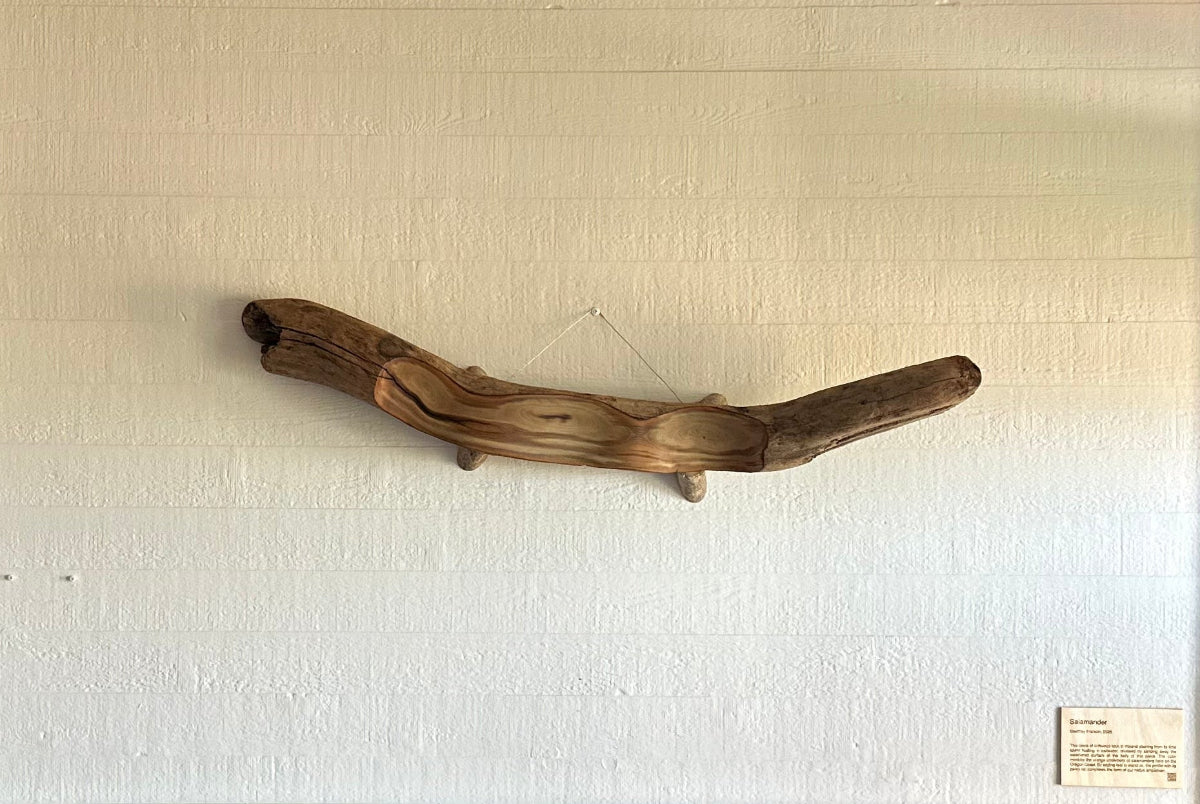
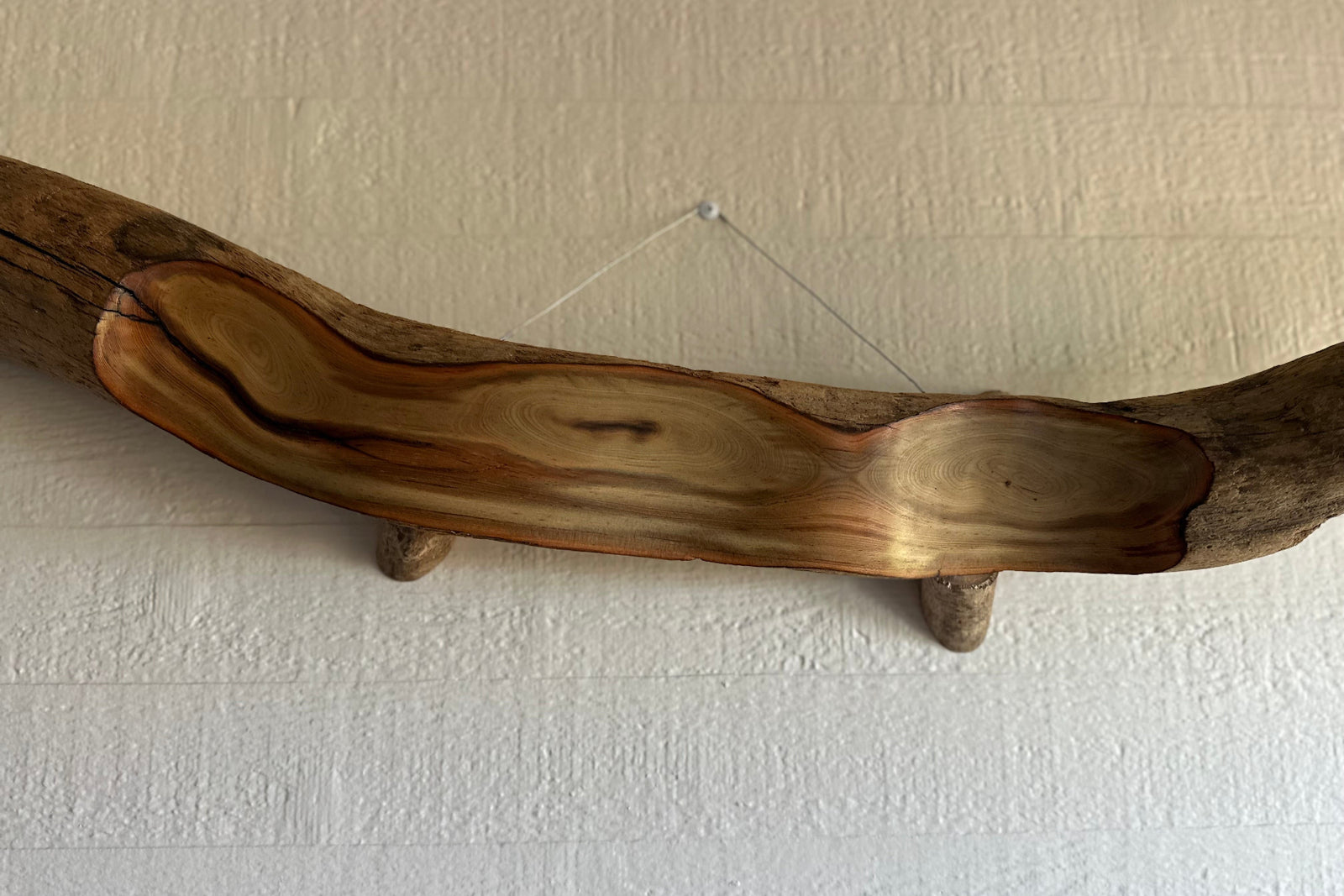
This piece of driftwood took in mineral staining from its time spent floating in saltwater, revealed by sanding away the weathered surface of the belly of this piece. The color mimicks the orange underbelly of salamanders here on the Oregon Coast. By adding feet to stand on, the profile with its perky tail completes the form of our native amphibian.
This piece of driftwood took in mineral staining from its time spent floating in saltwater, revealed by sanding away the weathered surface of the belly of this piece. The color mimicks the orange underbelly of salamanders here on the Oregon Coast. By adding feet to stand on, the profile with its perky tail completes the form of our native amphibian.


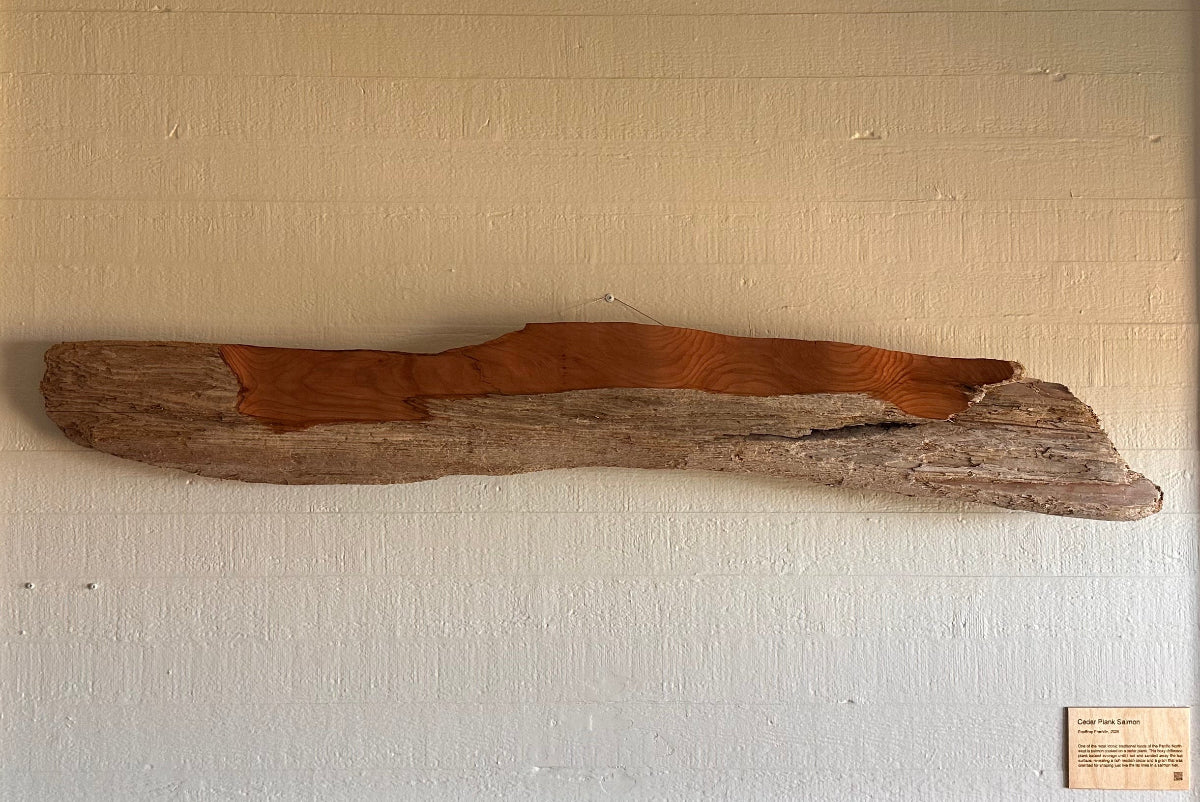
One of the most iconic traditional foods of the Pacific Northwest is salmon cooked on a cedar plank. This boxy driftwood plank looked average until I cut and sanded away the top surface, revealing a rich reddish cedar and a grain that was oriented for shaping just like the fat lines in a salmon filet.
One of the most iconic traditional foods of the Pacific Northwest is salmon cooked on a cedar plank. This boxy driftwood plank looked average until I cut and sanded away the top surface, revealing a rich reddish cedar and a grain that was oriented for shaping just like the fat lines in a salmon filet.


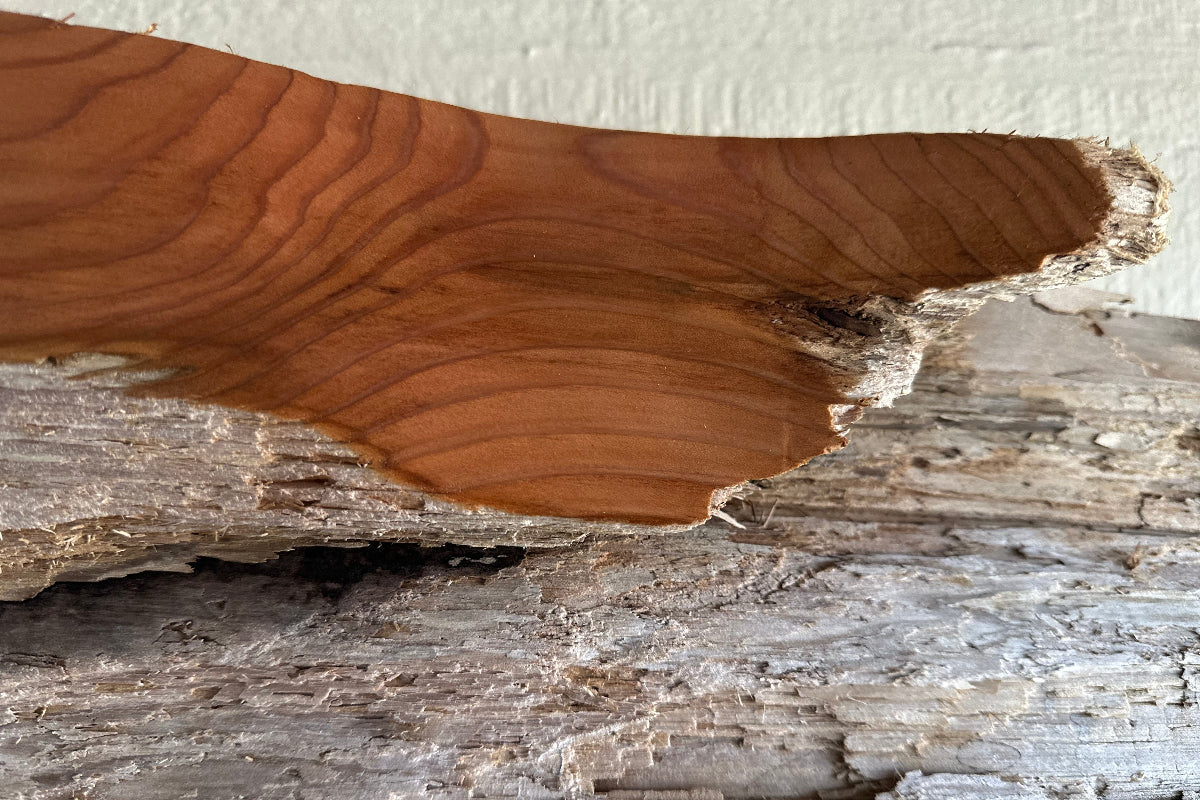
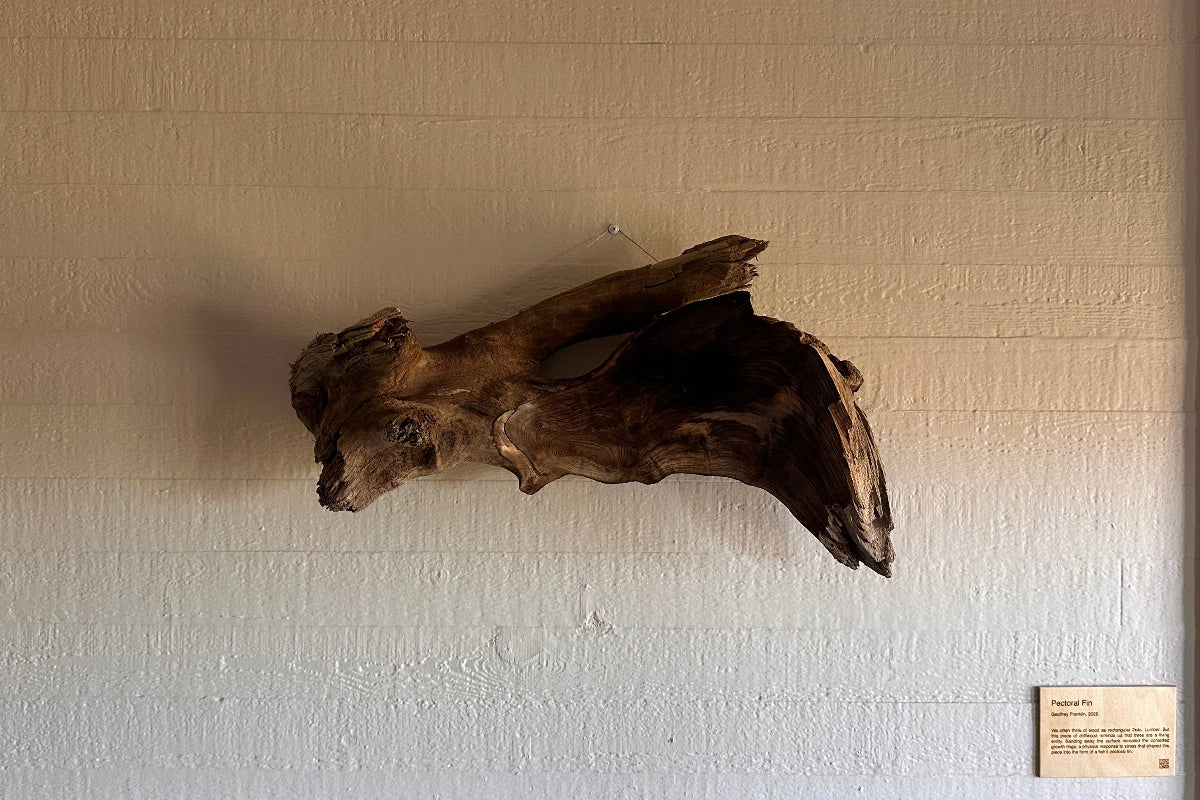
We often think of wood as rectangular 2x4s. Lumber. But this piece of driftwood reminds us that trees are a living entity. Sanding away the surface revealed the contorted growth rings: a physical response to stress that shaped this piece into the form of a fish’s pectoral fin.
We often think of wood as rectangular 2x4s. Lumber. But this piece of driftwood reminds us that trees are a living entity. Sanding away the surface revealed the contorted growth rings: a physical response to stress that shaped this piece into the form of a fish’s pectoral fin.


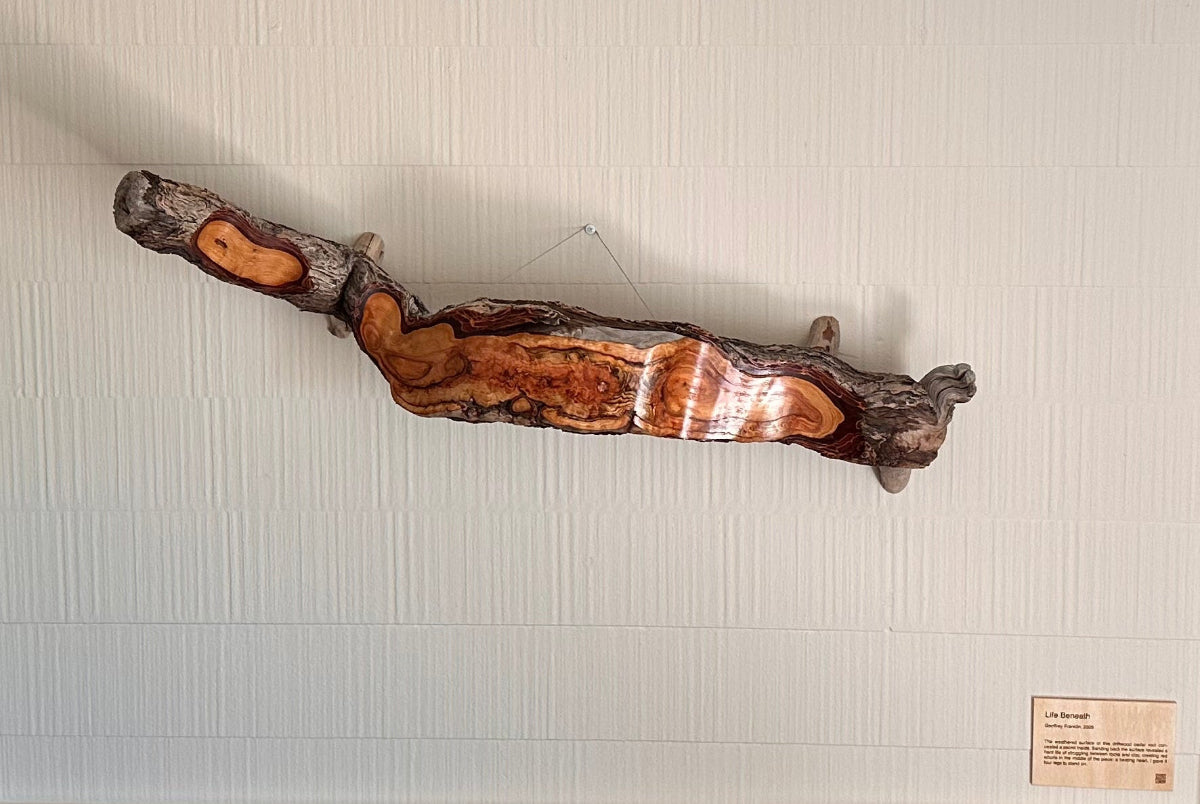
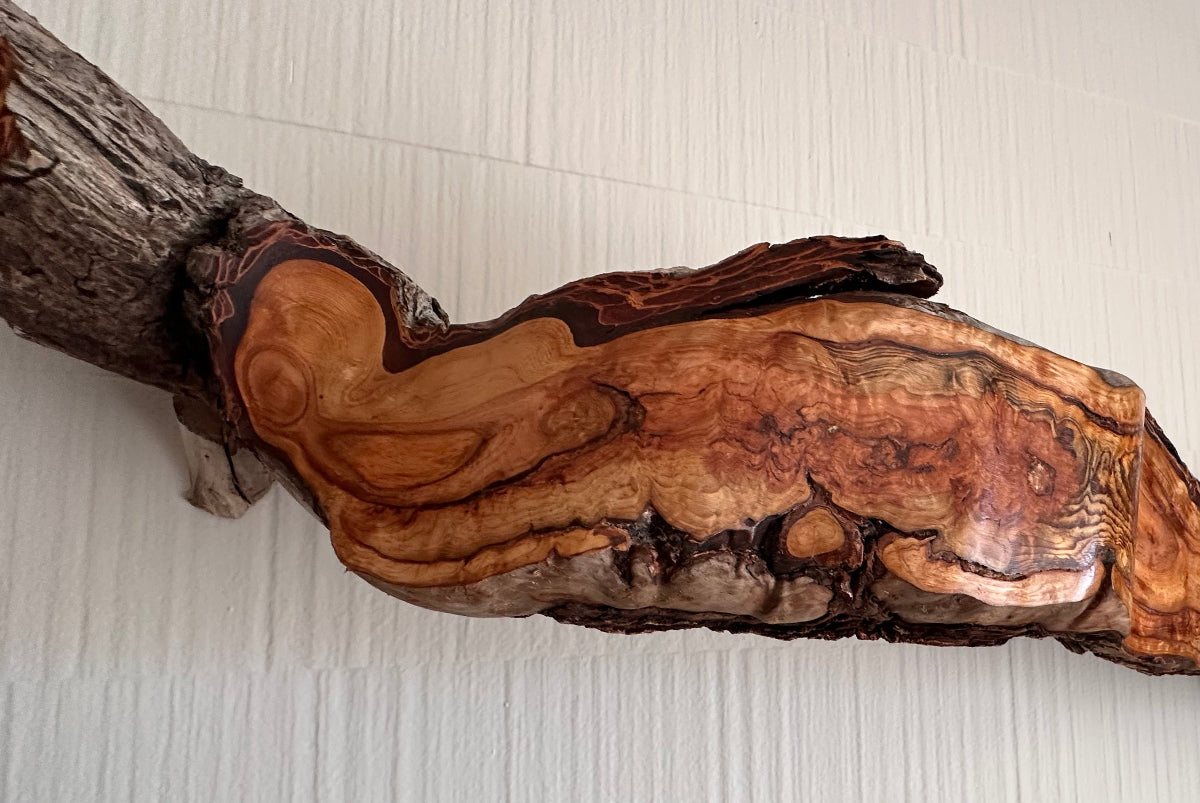
The weathered surface of this driftwood cedar root concealed a secret inside. Sanding back the surface revealed a hard life of struggling between rocks and clay, creating red whorls in the middle of the piece: a beating heart. I gave it four legs to stand on.
The weathered surface of this driftwood cedar root concealed a secret inside. Sanding back the surface revealed a hard life of struggling between rocks and clay, creating red whorls in the middle of the piece: a beating heart. I gave it four legs to stand on.


With gratitude to Manzanita Oceanfront Inn, Cove Built Construction, Lisa Zangerle of ZDC, and Escape Lodging for supporting local arts and artists.
With gratitude to Manzanita Oceanfront Inn, Cove Built Construction, Lisa Zangerle of ZDC, and Escape Lodging for supporting local arts and artists.